
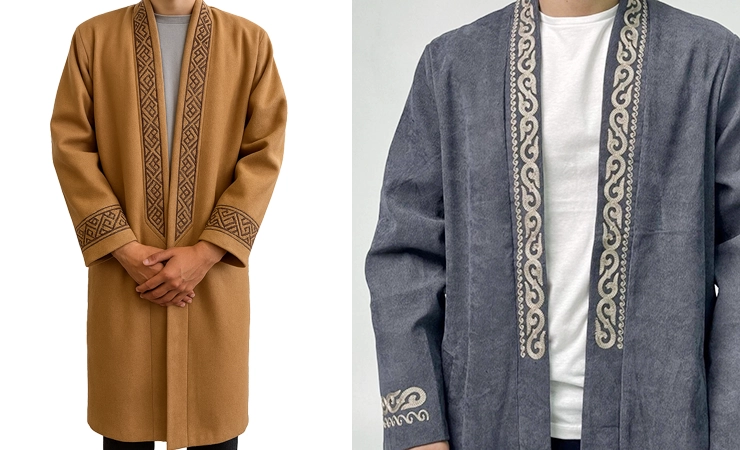
Traditional Kazakh clothing reflects the nomadic lifestyle, climate, craftsmanship, and cultural identity of the Kazakh people. For centuries, garments were designed not only for beauty but also for practicality, helping communities survive harsh степpe winters, strong winds, and constant travel across Central Asia. Rich embroidery, fur trims, leatherwork, silver jewelry, and flowing silhouettes became defining elements of Kazakh national dress. Today, traditional Kazakh clothing continues to inspire modern fashion designers, cultural festivals, luxury collections, and everyday style across Kazakhstan and beyond.
Men’s Traditional Clothing in Kazakhstan
Shapan
The shapan is one of the most recognizable pieces of traditional Kazakh menswear. It is a long robe or coat usually made from velvet, wool, or quilted fabric and often decorated with elaborate embroidery along the collar and sleeves. Historically, men wore shapan garments during ceremonies, celebrations, and important gatherings, while simpler versions were used for everyday life on the steppe. The robe symbolized respect, status, and hospitality, and gifting a shapan remains an important cultural tradition in Kazakhstan today.
Boryk
Boryk is a traditional Kazakh fur hat worn by men during colder seasons. It is commonly crafted from fox, sable, otter, or wolf fur, reflecting both the harsh climate and the importance of animal materials in nomadic culture. The hat is usually round in shape and designed to provide warmth during long journeys across open степpe landscapes. Beyond practicality, the boryk also represented social standing, with wealthier families often choosing more luxurious fur varieties and decorative details.
Ton
The ton is a traditional sheepskin or fur coat widely associated with Kazakh nomadic life. Made from thick animal hide and lined with wool or fur, it protected riders and travelers from freezing temperatures and strong winds. Craftsmen often decorated the edges of the coat with ornamental stitching, giving the heavy garment a refined appearance despite its utilitarian purpose. The ton remains an iconic example of how Kazakh clothing balanced durability, comfort, and artistry.
Aiyr Kalpak
The aiyr kalpak is a tall traditional hat made from felt or thick fabric and commonly associated with Central Asian heritage. In Kazakhstan, variations of the kalpak were worn by respected men, elders, and travelers because of their lightweight yet insulating structure. Many designs included geometric embroidery and contrasting trim inspired by traditional Kazakh patterns. The distinctive silhouette of the aiyr kalpak continues to appear in cultural performances, national celebrations, and modern interpretations of ethnic fashion.
Kimeshek Belt and Leather Accessories
Traditional Kazakh menswear was rarely complete without carefully crafted leather accessories and belts. Wide leather belts were used to secure robes and coats while also carrying practical items such as knives, pouches, and tools needed during travel. Artisans decorated these accessories with embossed patterns, metal buckles, and silver elements that reflected tribal symbolism and craftsmanship. These details transformed functional objects into important status symbols within Kazakh society.
Women’s Traditional Clothing in Kazakhstan
Saukele
The saukele is perhaps the most luxurious and visually striking element of traditional Kazakh women’s clothing. This tall bridal headdress was worn by brides during wedding ceremonies and could take months to create because of its detailed craftsmanship. Saukele designs often featured velvet, pearls, silver ornaments, feathers, coral beads, and precious stones, making each piece highly unique. Historically, the richness of a saukele reflected the social status and prosperity of the bride’s family.
Kimeshek
The kimeshek is a traditional white headdress worn by married Kazakh women. It covers the head, neck, shoulders, and chest while symbolizing modesty, dignity, and family status. Depending on the region, kimeshek designs could include delicate embroidery, beadwork, and layered fabric details that showcased local artistic traditions. Women often wore the garment daily, making it both a practical and deeply symbolic part of Kazakh cultural identity.
Camsole
The camsole is a sleeveless outer garment traditionally worn over dresses or shirts by Kazakh women. Usually made from velvet, silk, or richly colored fabrics, it was decorated with embroidery, gold thread, and ornamental patterns inspired by nature and nomadic symbolism. The fitted silhouette of the camsole added elegance and structure to women’s clothing while still allowing comfort and freedom of movement. Wealthier women frequently commissioned highly detailed camsoles to demonstrate refinement and social position.
Koylek
Koylek refers to the traditional dress worn by Kazakh women and girls. These dresses were typically long, flowing, and designed with lightweight fabrics suitable for movement and horseback life. Bright colors, layered sleeves, ruffles, and embroidered decorations made the koylek both practical and visually expressive. Special versions of the garment were created for weddings, festivals, and celebrations, often incorporating luxurious textiles and intricate handmade details.
Takıya
The takıya is a decorative skullcap traditionally worn by Kazakh women, especially younger girls and unmarried women. It is usually embroidered with floral motifs, beads, silver ornaments, and colorful threadwork that reflect regional design traditions. Lightweight and elegant, the takıya served as both a fashionable accessory and a cultural symbol connected to femininity and youth. Modern designers in Kazakhstan frequently reinterpret the takıya in contemporary collections inspired by national heritage.
Modern Clothing in Kazakhstan
Modern clothing in Kazakhstan combines international fashion trends with strong influences from traditional national dress. Younger generations in cities like Almaty and Astana often wear contemporary European and Asian styles while incorporating ethnic embroidery, traditional patterns, and heritage accessories into their outfits. Kazakh fashion designers increasingly use elements such as shapan silhouettes, saukele-inspired headpieces, and ornamental stitching in luxury fashion collections presented at regional and international fashion events. This fusion of modern style and historical identity has helped Kazakh clothing gain greater recognition in the global fashion industry while preserving the cultural heritage of the Kazakh people.
The post Complete Guide to Kazakh Clothing appeared first on The Fashiongton Post.