
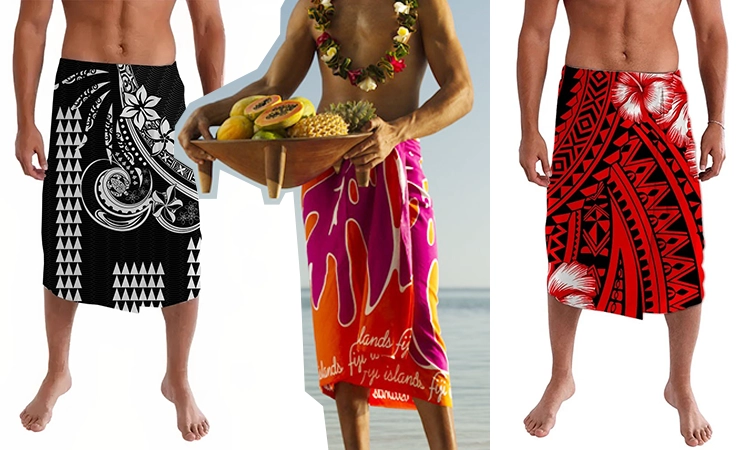
Traditional clothing in Tuvalu reflects the country’s tropical climate, Polynesian heritage, and strong community traditions. For centuries, clothing in Tuvalu was made from natural materials such as pandanus leaves, coconut fibers, shells, and bark cloth. Ceremonial dress remains deeply connected to dance, celebrations, and island identity, especially during cultural festivals and family gatherings. While modern fashion is common in everyday life, many traditional garments still hold an important place in Tuvaluan culture.
Men’s Traditional Clothing in Tuvalu
Lavalava
The lavalava is one of the most recognizable traditional garments worn by Tuvaluan men. This wraparound cloth is tied around the waist and usually reaches the knees or ankles, depending on personal preference and the occasion. Traditionally, lavalavas were made from bark cloth or woven plant fibers, although modern versions are now produced using lightweight cotton and printed fabrics. Men wear lavalavas during ceremonies, dances, church events, and community celebrations because the garment allows comfort in Tuvalu’s humid tropical climate.
Titi
The titi is a traditional skirt-like garment crafted from woven pandanus leaves or coconut fibers. In Tuvalu, men often wear titi garments during cultural dances and festive performances, where movement and rhythm are important parts of the presentation. The fibers are carefully prepared, dried, and woven by hand, making each piece unique. Decorative versions may include shells, dyed strands, or layered textures that create dramatic movement during traditional dances.
Te Vae
Te vae refers to decorative ceremonial adornments worn around the legs or ankles by Tuvaluan men during dances and rituals. These pieces are usually made from plant fibers, leaves, or flower garlands and are designed to enhance movement while performing traditional songs and dances. The sound and motion created by te vae add energy to cultural performances and emphasize rhythmic footwork. In many island communities, these adornments symbolize respect for tradition and connection to ancestral customs.
Fala Headdress
The fala headdress is a traditional headpiece made from woven pandanus leaves, flowers, and occasionally feathers or shells. Tuvaluan men wear these headdresses during formal ceremonies, celebrations, and dance performances. Each island community may create slightly different designs based on local traditions and available natural materials. The craftsmanship involved in weaving and decorating a fala headdress is highly respected and often passed down through generations.
Tapa Cloth Garments
Tapa cloth garments were historically important in Tuvalu before imported textiles became widespread. Tapa is made by beating the inner bark of certain trees into soft sheets that can be painted or decorated with symbolic patterns. Men traditionally wore tapa cloth during important ceremonies, chiefly events, and religious gatherings. Even today, tapa remains a respected cultural material that represents heritage, craftsmanship, and island identity across Polynesian societies.
Women’s Traditional Clothing in Tuvalu
Puletasi
The puletasi is one of the most common traditional outfits worn by Tuvaluan women. This matching two-piece outfit usually consists of a long skirt and a loose-fitting tunic top made from colorful fabric. Women wear puletasi garments for church services, weddings, community gatherings, and official celebrations. Bright floral prints and tropical patterns are especially popular because they reflect the vibrant atmosphere of island life.
Titi Skirt
Women in Tuvalu also wear decorative titi skirts during traditional dances and ceremonies. Female titi garments are often fuller and more layered than those worn by men, creating graceful movement during performances. The skirts are carefully woven from pandanus leaves, coconut fibers, or grasses and may be decorated with flowers or shells. Preparing a titi skirt requires patience and traditional weaving knowledge that is often taught within families.
Lei and Floral Garlands
Floral garlands play an important role in Tuvaluan women’s traditional dress. Women commonly wear leis made from fresh tropical flowers, leaves, and fragrant plants around the neck, head, or wrists during celebrations and welcoming ceremonies. These garlands symbolize hospitality, beauty, respect, and connection to nature. The colors and scents of the flowers also add elegance and cultural meaning to ceremonial clothing.
Tapa Cloth Wraps
Women in Tuvalu have long used tapa cloth wraps as ceremonial garments and decorative coverings. These wraps are traditionally worn during important family events, dances, and cultural festivals where heritage and tradition are celebrated. Tapa cloth used by women may feature hand-painted geometric patterns or symbolic island motifs that represent local identity. Because producing tapa cloth is labor-intensive, these garments are often valued as treasured cultural items.
Shell and Fiber Accessories
Traditional shell and fiber accessories are an important part of women’s clothing in Tuvalu. Necklaces, belts, bracelets, and woven ornaments are made using shells, seeds, coconut fibers, and natural materials gathered from the islands. These accessories are frequently paired with dance costumes and ceremonial outfits to create a complete traditional appearance. Many pieces are handmade by local artisans, preserving traditional crafting techniques and strengthening cultural identity.
Modern Clothing in Tuvalu
Modern clothing in Tuvalu combines international fashion with traditional island influences. Everyday outfits often include lightweight shirts, skirts, dresses, shorts, and Western-style casual wear suited to the tropical climate. Imported fabrics and clothing from neighboring Pacific countries, Australia, and New Zealand are widely available, especially in urban areas. Despite the popularity of modern fashion, traditional garments such as lavalava, puletasi, titi skirts, and floral garlands continue to play an important role during ceremonies, dances, church events, and cultural celebrations, helping preserve Tuvalu’s unique cultural heritage in the modern world.
The post Complete Guide to Tuvalu Clothing appeared first on The Fashiongton Post.