
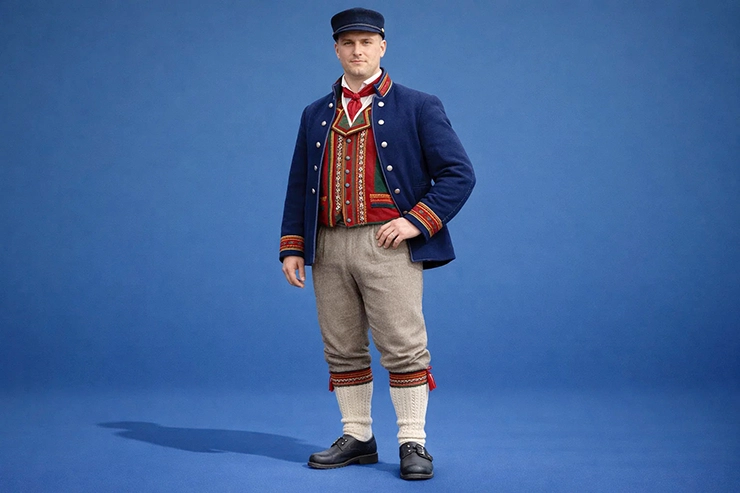
Finland’s clothing traditions reflect a deep connection to nature, climate, and cultural identity. Rooted in practicality yet rich in symbolism, Finnish garments evolved to withstand harsh northern weather while expressing regional heritage and social status. Traditional attire, often referred to as kansallispuku, varies by region and is still worn during festivals, weddings, and cultural events. Understanding these garments offers insight into Finland’s history, craftsmanship, and aesthetic values.
Men’s Traditional Clothing in Finland
Kansallispuku
The men’s kansallispuku is a formal representation of Finnish heritage, typically consisting of a tailored wool jacket, vest, trousers, and a white shirt. Each regional variation features distinct colors, embroidery, and weaving patterns that reflect local traditions. The outfit is often complemented by knee-length socks and leather shoes or boots, emphasizing both function and elegance. Materials are usually natural, such as wool and linen, ensuring durability in cold climates. This attire is commonly worn during national celebrations and folk performances.
Sarkapuku
The sarkapuku is a traditional outfit made from thick, homespun wool known as sarka, designed specifically for warmth and resilience. Historically worn by farmers and working-class men, it includes a jacket and trousers in earthy tones like grey or brown. Its dense fabric protects against wind and cold, making it ideal for outdoor labor in Finland’s harsh winters. Over time, the sarkapuku has become a symbol of rural life and Finnish perseverance. Today, it is occasionally worn in historical reenactments and cultural events.
Rekilaivapuku
The rekilaivapuku is known for its ornate vest, often richly embroidered with colorful patterns and metallic threads. This outfit includes a white shirt, dark trousers, and the standout vest, which showcases the craftsmanship of Finnish textile traditions. Originally associated with festive occasions, it reflects influences from both Eastern and Western European styles. The vest’s intricate designs often carry symbolic meanings or regional identifiers. It remains a striking example of decorative men’s clothing in Finnish culture.
Huopahattu
The huopahattu, or felt hat, is an essential accessory in traditional Finnish men’s attire. Typically worn with formal or semi-formal outfits, it adds a refined and structured element to the overall look. Made from pressed wool felt, the hat is both insulating and water-resistant, suitable for Finland’s unpredictable weather. Its shape and style may vary depending on the region and occasion. Beyond practicality, the huopahattu signifies respectability and tradition.
Gákti
The Sámi gákti is a traditional garment worn by the indigenous Sámi people of northern Finland. The men’s version is usually shorter than the women’s and features bold colors like blue, red, yellow, and green. It is adorned with geometric patterns, decorative bands, and sometimes silver accessories, each element indicating the wearer’s family or region. Made from wool or reindeer leather, it is designed for both warmth and mobility. The gákti remains a living tradition, worn during ceremonies and everyday life in Sámi communities.
Women’s Traditional Clothing in Finland
Kansallispuku
The women’s kansallispuku is a beautifully detailed ensemble consisting of a blouse, bodice, skirt, and apron. Each region has its own color palette and pattern combinations, often featuring stripes, florals, or intricate embroidery. Accessories such as shawls, headpieces, and jewelry enhance the outfit’s elegance and cultural significance. The garments are typically handmade using traditional weaving techniques passed down through generations. Worn during celebrations and national holidays, it represents Finnish pride and identity.
Puku
The puku is a general term for traditional Finnish dresses, often simpler than the full national costume but still rooted in heritage. These dresses are usually made from wool or linen and feature modest cuts with long sleeves and ankle-length skirts. They were historically worn in everyday rural life, balancing comfort with durability. Subtle decorative elements like pleats or minimal embroidery add character without compromising functionality. Today, the puku is appreciated for its timeless, understated aesthetic.
Gákti
The women’s gákti is a vibrant and symbolic garment worn by Sámi women, distinguished by its longer length and more elaborate detailing compared to the men’s version. It often includes a fitted bodice, flared skirt, and decorative trims that signify marital status or regional identity. Bright colors and bold patterns make it visually striking, while materials like wool ensure warmth in Arctic conditions. Accessories such as belts, brooches, and hats complete the ensemble. The gákti is deeply tied to Sámi culture and remains an important expression of identity.
Huivi
The huivi, or headscarf, is a traditional accessory worn by Finnish women, particularly in rural areas. It is typically made from cotton or silk and may feature floral prints or geometric designs. Beyond its decorative role, the headscarf provides protection from wind and cold, making it both practical and stylish. It is often tied in specific ways that can indicate regional customs or personal preference. The huivi continues to be worn during folk events and as a nod to traditional fashion.
Esiliina
The esiliina, or apron, is an integral part of women’s traditional Finnish attire, especially within the national costume. Usually worn over the skirt, it adds both functionality and visual contrast to the outfit. Aprons may be plain or decorated with embroidery, lace, or woven patterns, depending on the region. Historically, they protected clothing during household tasks, but they also became a symbol of femininity and craftsmanship. Today, the esiliina enhances the authenticity and completeness of traditional ensembles.
Modern Clothing in Finland
Modern clothing in Finland reflects a blend of minimalism, functionality, and sustainability. Influenced by the country’s climate, contemporary fashion emphasizes layering, high-quality materials, and practical design. Neutral tones such as black, grey, and beige dominate everyday wear, aligning with the Scandinavian aesthetic. Finnish designers often prioritize eco-friendly fabrics and ethical production, responding to growing global awareness of sustainability. While traditional elements occasionally inspire modern collections, today’s Finnish fashion is firmly rooted in simplicity, comfort, and innovation.
The post Complete Guide to Finnish Clothing appeared first on The Fashiongton Post.