
Table setting is not only a practical necessity but also an art form that reflects the taste and status of the hosts. Silver and silver-plated flatware occupy a special place in this art. Many wonder whether it’s worth buying only solid silver, or if silver-plating can be a worthy alternative. Let’s explore the differences between these materials, how to identify genuine silver and silver-plated items, and what to choose for everyday use, dinners, and formal occasions.
What Is Silver and Silver-Plating
Silver is a precious metal of high fineness, most commonly 925, 875, or 800. It consists entirely of a silver alloy with a small amount of other metals for strength. Silver is valuable in itself, durable, does not rust, and retains its shine for decades. Silver items are often passed down as heirlooms and are prized by collectors and luxury enthusiasts.
Silver-plating is the application of a thin layer of silver over a less expensive metal, such as copper, brass, or steel. These items have a beautiful shine and look elegant on the table, but over time the silver coating wears off, revealing the base metal. Unlike solid silver, silver-plated flatware is less durable and requires more careful handling.
Visual Signs and Markings
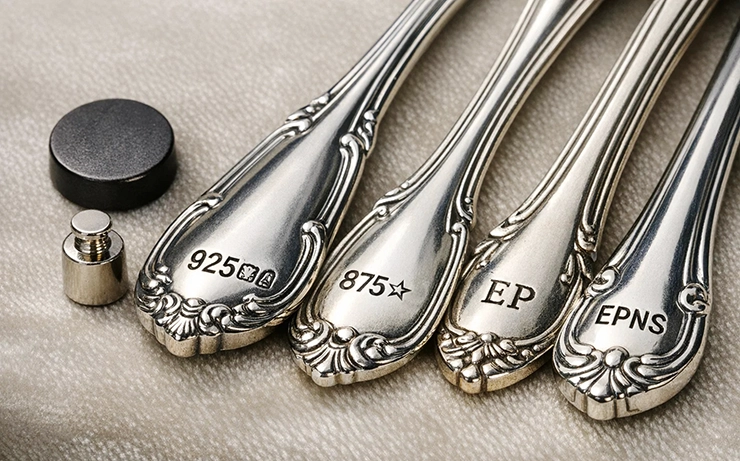
The main way to distinguish silver from silver-plating is to look for hallmarks or stamps. Solid silver always has a fineness mark (e.g., 925, 875, 800) or an assay office mark. Silver-plated items are usually marked with “Silver plated,” “EP,” or “EPNS,” indicating that only the surface is coated with silver.
Beyond markings, you can also tell the difference by weight and sound. Silver is denser and heavier compared to the copper or brass beneath the plating. When lightly tapped, a silver utensil produces a clear, ringing sound, while silver-plated metal sounds more muted.
Home Tests
If in doubt, simple tests can help. Silver is not magnetic, so if a magnet sticks, the metal is not pure silver. Silver also conducts heat very well: when placed in hot water, it heats quickly, whereas the metal under silver-plating stays cooler longer. More precise methods include iodine or sulfur ointment tests: iodine leaves a dark spot on silver, and sulfur ointment causes tarnishing. Silver-plated items may not show as strong a reaction.
Durability and Prestige
Silver is an investment. It lasts for decades and maintains both value and prestige. Silver-plating, on the other hand, is a more budget-friendly option, suitable for decorative table settings and special occasions, but not for daily heavy use. Vintage silver-plated flatware can look luxurious, especially if the silver layer is intact, but its coating wears over time, requiring careful maintenance.
Silver and Silver-Plating at Christofle
The renowned French house Christofle produces both solid silver and silver-plated flatware. Their markings clearly indicate the material: silver items carry a fineness mark and hallmark, while silver-plated pieces are marked “Silver plated” or “EPNS.” When buying, it’s important to check these marks carefully to avoid confusing solid silver with plated items.
Should You Choose Only Silver?
The choice depends on your goals. If durability, heirloom potential, and high investment value are important, solid silver is the way to go. If you want a luxurious table with a variety of shapes and designs but minimal daily use, silver-plating is also worth considering. Many collectors and antique enthusiasts combine both: silver-plating for decorative settings and solid silver for the most formal occasions.
Silver and silver-plating represent two different approaches to beauty and luxury on the table. Solid silver symbolizes eternity, status, and investment, while silver-plating offers elegance, accessibility, and decorative appeal. Knowing how to distinguish one from the other and what to look for in markings allows any connoisseur of fine living to make the right choice for their home and create a truly noble dining atmosphere.
The post Silver or Silver-Plated: Genuine Luxury or Elegant Illusion? appeared first on The Fashiongton Post.