
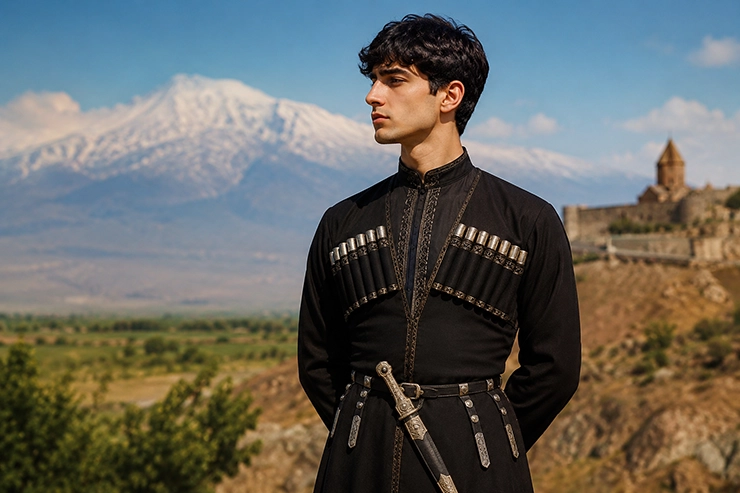
Armenian clothing reflects centuries of history, craftsmanship, and cultural identity. Traditional garments developed in different regions of historic Armenia, with local communities adapting fabrics, embroidery, and decorative details to suit both climate and social customs. Rich symbolism, vibrant colors, and intricate needlework have made Armenian national dress one of the most recognizable cultural traditions in the Caucasus. Today, these garments continue to inspire designers, cultural festivals, museums, and heritage events while preserving a strong connection to Armenia’s past.
Men’s Traditional Clothing in Armenia
Chokha
The Chokha is one of the most recognizable garments associated with Armenian men’s traditional clothing. This long wool coat features a fitted waist, broad shoulders, and decorative cartridge holders across the chest that originally served practical purposes during times of conflict. Armenian versions of the Chokha were commonly worn during ceremonies, celebrations, and important public gatherings, with colors varying by region and family tradition. High-quality wool, detailed tailoring, and embroidered accents made the Chokha both a symbol of dignity and an expression of Armenian craftsmanship.
Shalvar
Shalvar are loose-fitting trousers traditionally worn by Armenian men for comfort and ease of movement. Made from durable wool, linen, or cotton depending on the season, these trousers allowed farmers, horsemen, and craftsmen to work efficiently throughout the day. The generous cut made Shalvar practical for Armenia’s mountainous terrain and changing climate. They were typically secured with a fabric belt and paired with long shirts and outer garments to complete the traditional appearance.
Arkhalig
The Arkhalig is a fitted jacket or long coat worn underneath or instead of heavier outerwear. Usually tailored from fine wool, velvet, or silk for wealthier families, it featured elegant embroidery around the collar, cuffs, and front opening. The garment balanced practicality with sophistication, making it suitable for both daily use and festive occasions. Regional variations introduced different cuts, decorative stitching, and color combinations that reflected local Armenian traditions.
Papanak
The Papanak is a traditional Armenian head covering designed to provide warmth and protection against harsh weather. Often made from lambskin or felt, it was especially common among shepherds and villagers living in mountainous regions. Beyond its practical function, the shape and quality of the Papanak could indicate a man’s age, social standing, or regional identity. It remained an important component of Armenian national dress for centuries before modern hats gradually replaced it.
Goghnots
The Goghnots is a traditional wide sash or belt wrapped securely around the waist. Woven from colorful wool or silk, it helped hold garments in place while also supporting the lower back during physical work. Men frequently carried small personal items, tools, or pouches by tucking them into the folds of the belt. Decorative patterns woven into the Goghnots often reflected local artistic traditions and demonstrated the skill of Armenian textile artisans.
Women’s Traditional Clothing in Armenia
Taraz
The Taraz is the most iconic example of Armenian women’s traditional clothing and represents the country’s national costume. This beautifully decorated dress was often crafted from silk, velvet, satin, or fine wool and featured elaborate embroidery using gold or silver thread. Every region of Armenia developed distinctive Taraz styles with unique colors, ornaments, and decorative motifs that reflected local customs and family heritage. Women proudly wore Taraz during weddings, religious celebrations, festivals, and other important ceremonial occasions, making it a lasting symbol of Armenian cultural identity.
Arkhalig
Women’s Arkhalig served as a fitted overgarment worn above the dress to enhance both warmth and elegance. Unlike the men’s version, it was often decorated with intricate floral embroidery, metallic thread, lace, and luxurious fabrics. Tailors carefully shaped the garment to emphasize graceful lines while maintaining modesty according to traditional customs. Wealthier families commissioned highly detailed Arkhaligs that showcased exceptional Armenian embroidery techniques passed down through generations.
Gognots
The women’s Gognots was a beautifully woven sash that secured the dress at the waist while adding vibrant color to the overall outfit. These belts frequently featured geometric designs, floral motifs, and symbolic patterns believed to bring prosperity and protection. Depending on the region, silk tassels, woven fringes, or decorative metal elements enhanced the belt’s appearance. The Gognots completed the silhouette of traditional Armenian attire while highlighting the remarkable artistry of local weaving traditions.
Poosh
The Poosh is a traditional Armenian head covering worn by married women in many regions of historic Armenia. Crafted from fine fabrics such as silk or lightweight cotton, it covered the hair gracefully while often incorporating embroidered borders and ornamental details. Different tying styles, colors, and embellishments could indicate marital status, regional origin, or family customs. The Poosh represented modesty, respect, and adherence to long-standing Armenian cultural traditions.
Kond
The Kond is a decorative apron that formed an essential part of many traditional Armenian women’s outfits. Usually worn over the front of the dress, it protected clothing during daily household activities while serving as an important decorative element during celebrations. Rich embroidery, colorful stitching, and symbolic motifs transformed the Kond into far more than a practical accessory. Many examples displayed patterns representing fertility, prosperity, family unity, and protection, making the garment both functional and culturally meaningful.
Modern Clothing in Armenia
Modern clothing in Armenia combines international fashion trends with a growing appreciation for traditional heritage. Contemporary Armenian designers frequently incorporate embroidery inspired by Taraz, historic weaving patterns, and national ornaments into modern dresses, jackets, shirts, and accessories. Younger generations typically wear global fashion brands in everyday life, while traditional Armenian clothing remains popular for weddings, folk performances, national holidays, and cultural festivals. This balance between modern style and historical identity allows Armenia to preserve its rich clothing traditions while embracing contemporary fashion on the global stage.
The post Complete Guide to Armenian Clothing appeared first on The Fashiongton Post.