
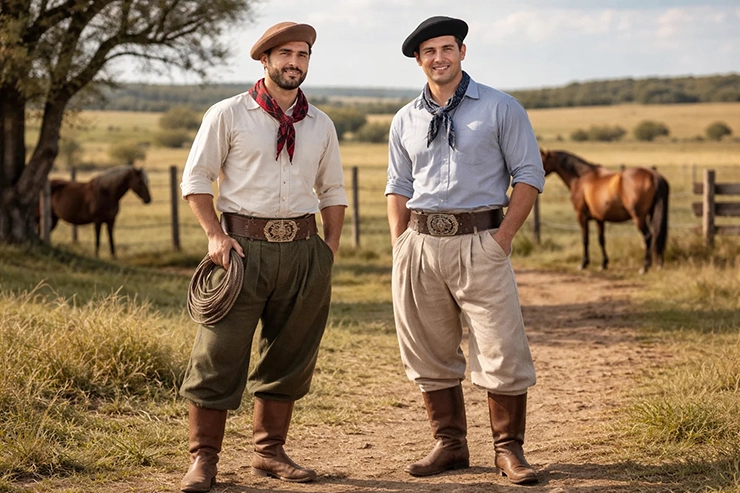
Uruguay’s clothing traditions reflect the country’s rural heritage, European influences, and the enduring cultural identity of the gaucho. Traditional garments developed primarily in the countryside, where practicality, climate, and horseback riding shaped everyday attire. Over time, these functional pieces evolved into recognizable national symbols, often worn during festivals, cultural celebrations, and traditional events. Understanding Uruguay’s traditional clothing provides insight into the nation’s history, lifestyle, and social customs. While modern fashion dominates daily life today, many of these garments remain powerful expressions of cultural pride.
Men’s Traditional Clothing in Uruguay
Bombachas de Campo
Bombachas de campo are loose, durable trousers traditionally worn by gauchos throughout Uruguay and neighboring regions. The pants are wide at the thighs and taper at the ankles, allowing comfort while riding horses and performing farm work. Typically made from sturdy cotton or wool, they are designed to withstand harsh rural conditions while still allowing freedom of movement. The trousers are usually secured with a belt or sash and paired with boots, forming one of the most recognizable elements of gaucho attire.
Poncho
The poncho is one of the most iconic garments associated with Uruguay’s countryside culture. It consists of a large rectangular piece of woven wool fabric with a central opening for the head, draping over the shoulders to provide warmth and protection from wind and rain. Traditionally handwoven, ponchos often feature geometric patterns and earthy colors reflecting regional weaving traditions. Beyond its practical function, the poncho symbolizes rural identity and remains widely worn during traditional events and cold seasons.
Chiripá
The chiripá is an older traditional garment that predates modern trousers and was commonly worn by early gauchos. It consists of a large cloth wrapped around the waist and passed between the legs, then tied with a belt or sash to secure it. This design allowed maximum flexibility for horseback riding and physical labor. Although it is rarely used in everyday life today, the chiripá remains an important historical symbol and can still be seen in cultural reenactments and folklore festivals.
The boina is a soft wool beret traditionally worn by men in Uruguay, particularly in rural areas. This headwear became popular through European immigration, especially from Spain and France, and was quickly adopted by gauchos for its practicality and comfort. The boina protects from sun and wind while remaining lightweight and easy to carry. Today, it remains a common accessory in traditional dress and is frequently seen during rural celebrations and folk gatherings.
Faja
The faja is a wide fabric sash worn around the waist, serving both functional and decorative purposes. Traditionally made of wool or cotton, it helps secure trousers or the chiripá while providing additional back support during physical work. The sash often features vibrant colors or woven patterns that reflect regional craftsmanship. In traditional attire, the faja also contributes to the layered aesthetic of gaucho clothing.
Women’s Traditional Clothing in Uruguay
The pollera is a traditional skirt widely associated with women’s folk attire in Uruguay. It is typically long and full, allowing freedom of movement while creating elegant flow during traditional dances. Polleras are often made from lightweight fabrics such as cotton and decorated with lace, embroidery, or floral prints. This garment plays a central role in folkloric performances and national celebrations, where vibrant skirts enhance the visual energy of traditional dance.
Blusa Criolla
The blusa criolla is a classic blouse worn with the pollera in traditional Uruguayan dress. Usually made from cotton or linen, it features long sleeves and delicate decorative elements such as lace trims, ruffles, or embroidered details. The blouse balances practicality with elegance, making it suitable for both rural life and festive occasions. Its simple yet refined design reflects the influence of Spanish colonial fashion traditions.
Rebozo
The rebozo is a versatile shawl commonly worn by women across many Latin American cultures, including Uruguay. It is typically made of wool or cotton and draped over the shoulders for warmth or modesty. The rebozo can also serve practical functions, such as carrying small items or protecting against changing weather. In traditional dress, it adds texture and color while complementing the rest of the outfit.
Delantal
The delantal is a decorative apron worn over the pollera, often associated with domestic work but also incorporated into traditional costumes. Aprons are usually made from cotton and may feature embroidered patterns, lace edges, or colorful prints. While originally practical for protecting clothing during household tasks, the delantal gradually became an ornamental element in folkloric attire. Today it remains a recognizable component of women’s traditional clothing during cultural events.
Peinetón
The peinetón is a large ornamental hair comb used to style and decorate women’s hair in traditional outfits. Usually made from metal, tortoiseshell, or decorated plastic in modern versions, it is placed at the back of the head to hold elaborate hairstyles. Historically, peinetones symbolized elegance and social status, particularly during the nineteenth century. In contemporary folk costumes, they serve as decorative accessories that highlight traditional hairstyles.
Modern Clothing in Uruguay
Modern clothing in Uruguay reflects a blend of European fashion influence and relaxed South American style. In urban centers such as Montevideo, people tend to favor contemporary global trends, including casual streetwear, minimalist tailoring, and practical everyday fashion. Denim, neutral colors, and comfortable layering are common choices due to the country’s moderate climate. At the same time, elements of traditional gaucho style occasionally appear in modern fashion, especially in rural areas and cultural events. This combination of heritage and contemporary design allows Uruguay’s clothing culture to remain both modern and deeply connected to its traditions.
The post Complete Guide to Uruguay Clothing appeared first on The Fashiongton Post.