
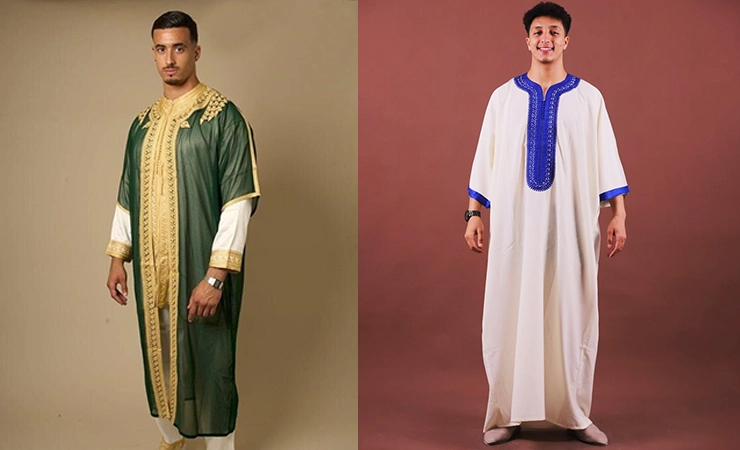
Tunisian clothing reflects a rich blend of Berber, Arab, Ottoman, and Mediterranean influences shaped by centuries of cultural exchange. Traditional garments in Tunisia are known for their elegance, functionality, and deep symbolic meaning tied to identity, region, and social status. From flowing robes to finely woven textiles, each piece tells a story about heritage and craftsmanship. Today, these garments continue to inspire both ceremonial wear and modern fashion design.
Men’s Traditional Clothing in Tunisia
Jebba
The jebba is one of the most iconic pieces of traditional Tunisian clothing for men. It is a long, loose-fitting robe usually made from wool for winter or lighter fabrics for summer wear. The garment is often sleeveless or short-sleeved, allowing it to be worn comfortably over other layers. Historically, the jebba was associated with dignity and formality, commonly worn during religious celebrations, weddings, and official occasions. Its elegant silhouette and refined tailoring make it a timeless symbol of Tunisian masculine tradition.
Burnous
The burnous is a long, hooded cloak that plays an important role in Tunisian heritage. Traditionally made from thick wool, it was designed to protect against cold weather in mountainous and rural regions. The burnous is often white or cream-colored, symbolizing purity and social prestige. It is commonly worn over the jebba or other garments during formal events or ceremonies. Today, it remains a powerful cultural emblem often associated with respect, authority, and tradition.
Chechia
The chechia is a soft, red felt cap that is one of the most recognizable elements of Tunisian traditional attire. It has historical roots that trace back centuries and is widely considered a national symbol of Tunisia. The chechia is typically handmade using traditional felting techniques passed down through generations. It is worn by men of all ages, especially during religious gatherings and cultural celebrations. Its simplicity and distinctive color make it an enduring piece of national identity.
Sarouel
The sarouel is a pair of loose, baggy trousers that are an essential part of traditional Tunisian clothing. Designed for comfort and mobility, they are often worn in rural areas and during physical labor. The sarouel can be made from cotton, wool, or linen depending on the season and purpose. It is usually paired with a jebba or simple shirt, creating a practical yet culturally rooted outfit. Over time, the sarouel has also influenced modern streetwear and contemporary fashion designs.
Farmla
The farmla is a traditional sleeveless vest worn over shirts or robes in Tunisia. It is often richly decorated with embroidery, especially in formal or ceremonial versions. The garment adds a layer of elegance and structure to traditional male outfits. Historically, the farmla was a sign of refinement and attention to detail in dress. Today, it is still worn during weddings and cultural events as a nod to heritage and style.
Women’s Traditional Clothing in Tunisia
Blousa Tunisienne
The blousa tunisienne is a traditional dress worn by women across different regions of Tunisia. It is usually made from lightweight fabrics and features vibrant embroidery or decorative patterns. The design varies by region, reflecting local cultural influences and craftsmanship traditions. This garment is often worn during celebrations, weddings, and festive gatherings. Its combination of comfort and elegance makes it one of the most beloved pieces of Tunisian women’s clothing.
Sefseri
The sefseri is a traditional white veil-like garment worn by Tunisian women, especially in urban areas in the past. It is made from a large piece of lightweight fabric draped over the body and head. The sefseri provides modesty while also allowing mobility and comfort in public spaces. Although its everyday use has declined, it is still worn during cultural or religious occasions. Today, it remains a powerful symbol of traditional Tunisian femininity and heritage.
Fouta
The fouta is a versatile woven textile that is traditionally used as a wrap skirt or body covering. It is commonly worn in coastal regions and is often paired with a simple top or blouse. The fabric is usually handwoven, featuring stripes or geometric patterns that reflect regional craftsmanship. Beyond clothing, the fouta is also used as a towel or beach wrap in modern settings. Its adaptability has helped it remain relevant across generations.
Keswa El Kbira
The keswa el kbira is a luxurious ceremonial dress traditionally worn by brides in Tunisia. It is heavily decorated with gold embroidery, velvet fabrics, and intricate detailing. The outfit often consists of multiple layers and is complemented by elaborate jewelry. Historically, it symbolized wealth, status, and family heritage during wedding celebrations. Even today, it remains one of the most prestigious and visually striking garments in Tunisian culture.
Jebba Femme
The women’s jebba is an adapted version of the traditional male robe, designed with a more tailored and decorative approach. It is often made from silk, satin, or fine cotton and embellished with embroidery or metallic thread. This garment is typically worn during formal events and celebrations. It reflects both cultural continuity and feminine elegance within Tunisian dress traditions. Over time, it has become a key piece in preserving traditional craftsmanship in women’s fashion.
Modern Clothing in Tunisia
Modern clothing in Tunisia reflects a dynamic blend of global fashion trends and local cultural identity. In urban areas, many people wear contemporary Western-style clothing such as jeans, shirts, dresses, and business attire in everyday life. However, traditional elements often appear in modern fashion through embroidery, textile patterns, and reinterpretations of classic garments. Tunisian designers frequently incorporate heritage motifs into modern silhouettes, creating a unique fusion of old and new. This balance between tradition and modernity continues to define Tunisia’s evolving fashion landscape.
The post Complete Guide to Tunisian Clothing appeared first on The Fashiongton Post.