
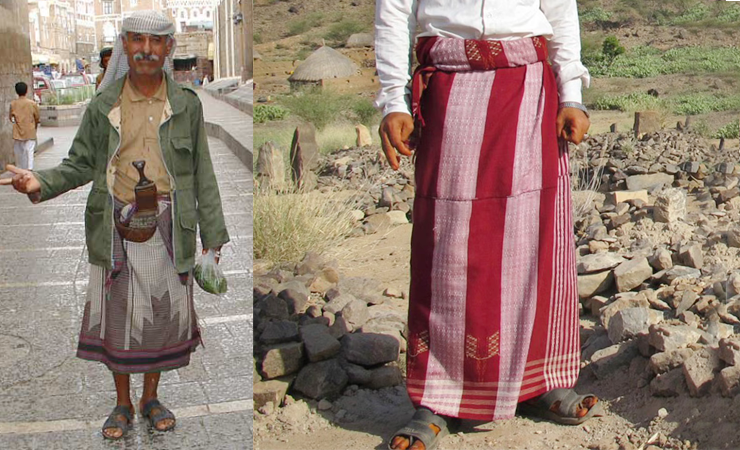
Yemeni clothing reflects the country’s deep-rooted history, diverse geography, and cultural traditions. While regional variations exist, traditional attire remains an essential part of Yemeni identity, symbolizing heritage and social status. Both men and women wear distinct garments that are practical, modest, and suited to the local climate. Below is an in-depth look at five key pieces of traditional clothing for men and women in Yemen.
Traditional Yemeni Men’s Clothing
Futa
Futa is a wraparound skirt-like garment worn by men, particularly in the southern and coastal regions. Made from cotton or linen, it is lightweight and breathable, making it ideal for Yemen’s warm climate. The futa often features colorful patterns and stripes, and it is secured at the waist with a simple knot. It is worn casually, though it can be paired with a tunic for a more formal look.
Thobe (Jalabiya)
Thobe is a long, flowing robe, the thobe (or jalabiya) is a common traditional garment worn by Yemeni men, especially in the northern regions. Typically made of white or light-colored fabric, it is designed for comfort and modesty. The thobe is often worn with a belt or sash and may be paired with a jacket or vest for formal occasions.
Jambia (Dagger and Belt)
Jambia is a curved dagger that is an essential part of Yemeni men’s attire, symbolizing honor, manhood, and tribal affiliation. It is worn in a richly decorated belt, often made of leather or fabric with intricate embroidery. While the jambia is no longer used as a weapon, it remains a prestigious accessory at social and cultural gatherings.
Maqrama (Headscarf)
Maqrama is a traditional headscarf worn by Yemeni men, particularly in rural areas. It can be wrapped around the head as protection from the sun or dust, or draped over the shoulders. The scarf varies in color and material, with some featuring embroidered designs that reflect regional influences.
Zanna (Turban)
Zanna is a type of turban worn mainly by men in Yemen’s highlands. This headpiece, often made of white or patterned cloth, serves both a practical and symbolic purpose. It protects from the sun and cold while also signifying social status and tribal heritage. Some men choose elaborate wrapping styles to distinguish themselves.
Traditional Yemeni Women’s Clothing
Balto (Abaya)
Balto is a long black cloak worn by many Yemeni women, particularly in urban areas. It serves as an outer garment that provides modesty and elegance. While traditionally simple, modern versions of the balto often feature embroidery, lace, or decorative elements along the sleeves and hemline.
Sitara
Sitara is a strikingly colorful garment, the sitara is a traditional dress worn by women in rural Yemen, particularly in the northern regions. It is a full-length robe with bright patterns, floral designs, and intricate embroidery. The sitara is often worn with a headscarf, and its vibrant colors symbolize femininity and cultural pride.
Sharshaf
Sharshaf is a two-piece garment consisting of a long skirt and a loose-fitting top, often accompanied by a face veil. It is commonly worn in conservative regions of Yemen, providing both coverage and comfort. The sharshaf is usually made of lightweight fabric, allowing for ease of movement.
Hijab and Niqab
Many Yemeni women wear the hijab (headscarf) or niqab (face veil) as part of their daily attire. The hijab covers the hair, while the niqab covers the face, leaving only the eyes visible. These pieces are rooted in religious and cultural traditions, with variations in style and fabric based on personal preference and regional norms.
Thobe Nashal
Thobe nashal is a luxurious dress traditionally worn for special occasions like weddings and celebrations. It is an elaborately embroidered gown with gold or silver threadwork, reflecting Yemen’s rich textile heritage. The dress is often paired with heavy jewelry, including gold necklaces, bangles, and earrings.
Modern Clothing in Yemen
In contemporary Yemen, clothing styles have evolved while maintaining traditional influences. Many men wear Western-style trousers and shirts for daily activities, reserving the futa or thobe for cultural gatherings. Women in urban areas may opt for modern abayas with intricate designs, while younger generations occasionally incorporate Western fashion, such as jeans and tunics, under modest outerwear. However, conservative dress codes remain prevalent, particularly in rural regions, where traditional clothing continues to define cultural identity. Yemen’s fashion remains a beautiful blend of history, practicality, and cultural pride, reflecting the resilience and heritage of its people.
The post Complete Guide to Yemeni Clothing appeared first on The Fashiongton Post.