
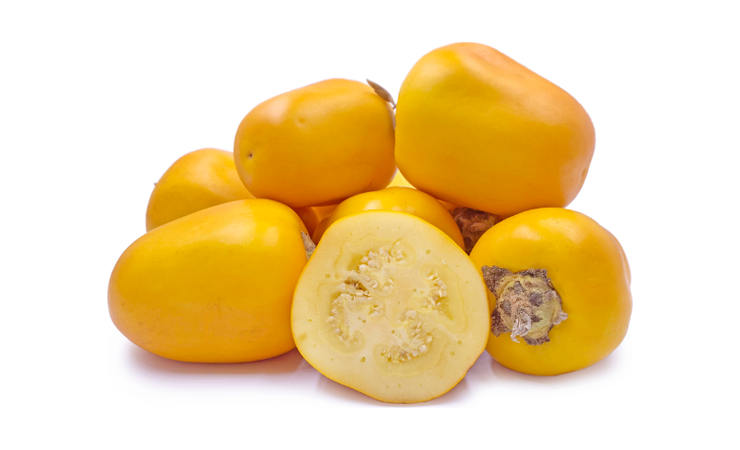
Cocona is a tropical fruit native to the Amazon rainforest, particularly found in Peru, Colombia, Ecuador, and Brazil. It belongs to the Solanaceae (nightshade) family, which includes tomatoes, eggplants, and potatoes. The fruit has a smooth, thin skin that can be yellow, orange, or red when ripe, and its size and shape resemble a small tomato or a large plum.
Cocona thrives in the warm, humid conditions of the Amazon basin and is cultivated in regions with rich, well-draining soil. It is commonly grown in small farms or home gardens in South America, where it is valued for its nutritional and medicinal properties. The plant grows as a bush and produces fruit within a year of planting.
The taste of cocona is a balance between sweet and tangy, similar to a mix of tomatoes, citrus, and passion fruit. Some varieties are more acidic, while others have a milder, fruitier profile. The texture is juicy and slightly pulpy, making it refreshing to eat raw or in culinary preparations.
Cocona can be eaten fresh, peeled, and sliced, often sprinkled with a bit of salt or sugar to enhance its flavor. It is widely used in juices, smoothies, jams, and sauces, and it pairs well with meats, fish, and salads. In Peruvian cuisine, cocona is often made into spicy sauces, similar to ají, to accompany grilled dishes. The fruit’s acidity makes it a good ingredient for marinades, and it can also be blended into desserts.
Cocona is a low-calorie fruit with high water content, making it suitable for weight-conscious diets. It is rich in vitamin C, fiber, and antioxidants, which contribute to immune support and digestion. Its diuretic properties make it beneficial for kidney health, and it is sometimes consumed to regulate blood pressure.
The post Cocona appeared first on The Fashiongton Post.