
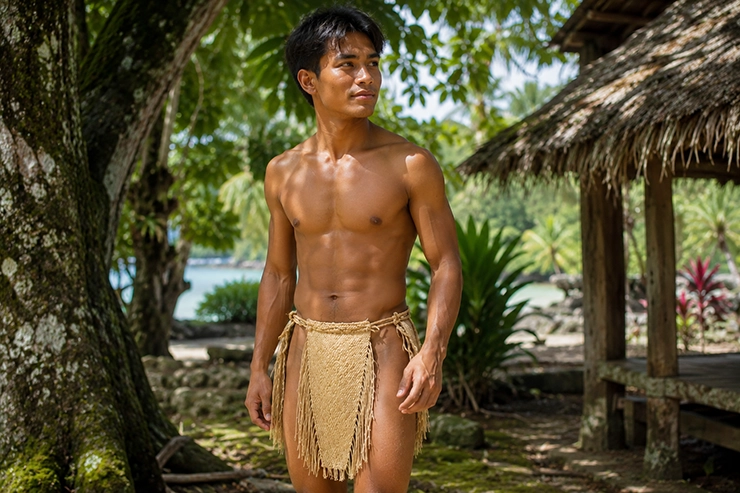
The Federated States of Micronesia is a Pacific island nation where clothing has long reflected the environment, cultural traditions, and local craftsmanship. Across the four states—Yap, Chuuk, Pohnpei, and Kosrae—traditional garments developed from abundant natural materials such as hibiscus fiber, banana fiber, pandanus leaves, and coconut leaves. While styles vary slightly from island to island, many garments share common roots in practicality, ceremonial significance, and respect for community customs. Today, traditional clothing continues to play an important role during festivals, dances, cultural celebrations, and important family events, preserving the heritage of one of Oceania’s most fascinating island nations.
Men’s Traditional Clothing in Federated States of Micronesia
Loincloth
The traditional loincloth has been one of the oldest and most recognizable garments worn by men throughout the Federated States of Micronesia. Traditionally crafted from woven hibiscus bark fiber, banana fiber, or other locally available plant materials, it was designed to provide comfort in the tropical climate. The garment wraps securely around the waist while allowing complete freedom of movement for fishing, canoe building, farming, and other daily activities. Although everyday wear has shifted toward modern clothing, the loincloth remains an important symbol of cultural identity and is frequently worn during traditional ceremonies and cultural performances.
Lava-Lava
The lava-lava is a rectangular wrap garment widely worn by men across many Pacific islands, including parts of the Federated States of Micronesia. Made from lightweight cotton in modern times, it evolved from earlier woven natural-fiber wraps while maintaining the same practical design. Men tie the cloth around the waist, making it suitable for the humid tropical weather and everyday activities. During cultural celebrations, brightly colored or patterned lava-lavas often accompany traditional dances and community gatherings, reflecting both island heritage and Pacific-wide cultural connections.
Hibiscus Fiber Waist Wrap
Before imported textiles became common, many Micronesian men wore waist wraps woven from strips of hibiscus bark fiber. The bark was carefully processed, softened, and braided into durable material that could withstand regular use. These wraps demonstrated the remarkable textile skills developed by island communities using entirely natural resources. Today they are recreated mainly for cultural festivals, educational demonstrations, and heritage exhibitions where traditional weaving techniques are proudly showcased.
Ceremonial Dance Skirt
Traditional dance performances often feature decorative skirts specifically created for ceremonial occasions. These skirts are typically woven from fresh or dried pandanus leaves, coconut leaves, or other native plant fibers that create dramatic movement during dancing. The garments are frequently enhanced with shells, feathers, seeds, or colorful plant decorations that represent local artistry. Wearing a ceremonial dance skirt connects performers with generations of ancestors who preserved songs, dances, and oral traditions through community celebrations.
Yapese Grass Skirt
In the state of Yap, men sometimes wear specially woven grass skirts during cultural festivals and ceremonial dances. Crafted from finely prepared pandanus or other local grasses, these skirts demonstrate the island’s highly respected weaving traditions. The careful preparation of the fibers reflects patience, craftsmanship, and deep cultural knowledge passed from elders to younger generations. Although not worn as everyday clothing, the Yapese grass skirt remains an iconic element of traditional performances and cultural preservation initiatives.
Women’s Traditional Clothing in Federated States of Micronesia
Lihli
The lihli is among the best-known traditional garments associated with women in parts of the Federated States of Micronesia, particularly on Yap. This traditional grass skirt is carefully woven from finely prepared hibiscus fiber, pandanus leaves, or other local plant materials using techniques that have been passed down for centuries. The quality of the weaving often reflects the skill and experience of the artisan who created it. Today the lihli is most commonly worn during traditional ceremonies, cultural festivals, and dance performances where it represents pride in Yapese heritage.
Pandanus Fiber Skirt
Pandanus fiber skirts have been worn by women across various Micronesian islands for generations. The leaves are harvested, dried, split into narrow strips, and expertly woven into flexible garments that remain comfortable in tropical conditions. Producing a high-quality skirt requires considerable time and careful craftsmanship, making each piece an example of traditional island artistry. Many pandanus skirts are reserved for important celebrations where they symbolize continuity between past and present generations.
Hibiscus Bark Skirt
Women also traditionally created skirts using processed hibiscus bark, transforming raw plant material into soft, wearable fiber through soaking, beating, and drying techniques. The resulting garment provided both comfort and durability while making full use of locally available resources. These skirts highlight the close relationship between Micronesian communities and their natural environment, where sustainable materials were essential to everyday life. Modern examples are primarily produced for cultural education, heritage festivals, and museum demonstrations.
Ceremonial Dance Skirt
Women’s ceremonial dance skirts are specially designed to enhance traditional performances through movement and visual beauty. Woven from pandanus leaves or other native fibers, they are frequently decorated with shells, flowers, feathers, and colorful natural ornaments. Every decorative element may represent aspects of local identity, family traditions, or island customs depending on the community. These skirts remain central to cultural performances that celebrate the history and artistic traditions of the Federated States of Micronesia.
Flower-Adorned Festival Wrap
For festive occasions, women often complement traditional skirts with beautifully arranged floral wraps and natural adornments. Fresh tropical flowers, fragrant leaves, woven garlands, and shell accessories are combined to create elegant ceremonial attire that reflects the islands’ rich biodiversity. These garments emphasize harmony with nature while showcasing the creativity of local artisans. Flower-adorned festival wraps continue to be popular during weddings, cultural exhibitions, community celebrations, and important island festivals.
Modern Clothing in Federated States of Micronesia
Modern clothing in the Federated States of Micronesia closely resembles casual tropical fashion found throughout the Pacific region. Lightweight T-shirts, shorts, dresses, skirts, polo shirts, and the lava-lava are commonly worn for everyday comfort in the warm climate. Imported fabrics and international fashion brands have become increasingly popular, especially among younger generations, while modest attire is generally appreciated in villages and community settings. At the same time, traditional garments continue to hold deep cultural value and are proudly worn during festivals, ceremonies, dance performances, and national celebrations, ensuring that Micronesian clothing heritage remains an important part of contemporary island life.
The post Complete Guide to Federated States of Micronesia Clothing appeared first on The Fashiongton Post.