
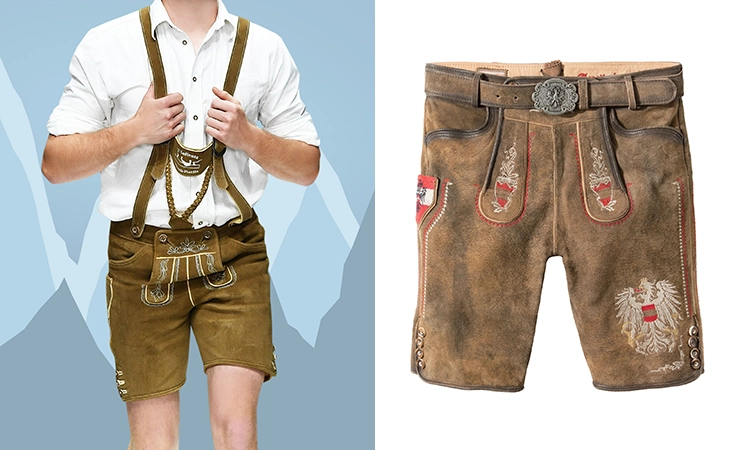
Austria’s clothing heritage is a refined blend of Alpine practicality, regional identity, and centuries-old craftsmanship. Traditional garments are not merely costumes reserved for festivals—they are deeply rooted symbols of local pride, social status, and cultural continuity. From the mountainous regions of Tyrol to the elegant streets of Vienna, Austrian attire reflects both rural resilience and aristocratic influence.
Men’s Traditional Clothing in Austria
Lederhosen
Lederhosen are perhaps the most recognizable element of Austrian men’s traditional attire, consisting of knee-length or short leather trousers. Originally worn by peasants and hunters, these garments were valued for their durability and resistance to harsh outdoor conditions. Typically made from deerskin or goatskin, Lederhosen often feature decorative embroidery that varies by region and sometimes indicates the wearer’s origin. Over time, they evolved from purely functional workwear into a symbol of cultural pride, now commonly worn during festivals and celebrations.
Trachten Jacket (Janker)
The Janker is a traditional Austrian jacket that complements Lederhosen or other formal attire. Usually made from wool or loden fabric, it provides warmth while maintaining a structured, elegant silhouette. Characterized by its simple cut, horn buttons, and minimalistic detailing, the Janker reflects understated Alpine sophistication. It is versatile enough to be worn both casually and during formal events, making it a staple in traditional men’s wardrobes.
Haferl Shoes
Haferl shoes are robust leather footwear designed to withstand the rugged Alpine terrain. With their distinctive side lacing and sturdy soles, they offer both comfort and durability for outdoor activities. Historically worn by workers and farmers, these shoes have become an essential part of traditional Austrian outfits. Today, they are often paired with wool socks and Lederhosen, maintaining their rustic charm while adapting to modern craftsmanship standards.
Trachten Shirt
The Trachten shirt is typically a crisp, long-sleeved shirt made from cotton or linen, often in white or checkered patterns. It serves as the foundational layer of traditional Austrian menswear, offering both comfort and style. The design is usually simple but refined, sometimes featuring subtle embroidery or decorative buttons. Its versatility allows it to be worn tucked into Lederhosen or trousers, making it suitable for both festive and everyday occasions.
Tirolerhut (Alpine Hat)
The Tirolerhut is a traditional Alpine hat, usually made from felt and adorned with decorative elements such as feathers, cords, or pins. It is strongly associated with the Tyrolean region and has become an iconic symbol of Austrian heritage. Beyond its aesthetic appeal, the hat also serves a practical purpose by providing protection against the elements. Each variation of the Tirolerhut can reflect regional identity, making it a meaningful accessory rather than just a stylistic addition.
Women’s Traditional Clothing in Austria
Dirndl
The Dirndl is the most iconic piece of traditional Austrian women’s clothing, consisting of a bodice, blouse, full skirt, and apron. Originally worn by rural workers, it has evolved into a fashionable garment celebrated for its flattering silhouette. The style, color, and fabric of a Dirndl can vary significantly depending on the region and occasion. Notably, the way the apron is tied can indicate a woman’s marital status, adding a layer of social symbolism to the outfit.
Dirndl Blouse
Worn underneath the Dirndl, the blouse is typically cropped and features puffed sleeves and a low neckline. Made from lightweight fabrics such as cotton or lace, it adds both elegance and femininity to the overall look. The blouse is designed to complement the bodice, enhancing the traditional silhouette. Variations in sleeve length and neckline allow for seasonal and stylistic adaptability.
Schürze (Apron)
The Schürze, or apron, is an essential component of the Dirndl ensemble. Beyond its decorative function, it historically served as practical protection for the skirt during daily work. Today, it is often crafted from fine fabrics and adorned with intricate patterns or embroidery. The bow placement on the apron carries cultural meaning, subtly communicating whether the wearer is single, married, or widowed.
Trachten Skirt
Separate from the Dirndl, the Trachten skirt is a traditional garment that can be paired with various blouses and jackets. Typically long and full, it is made from high-quality materials such as wool or cotton, offering both comfort and elegance. The skirt often features pleats and decorative trims that reflect regional styles. It provides a more flexible approach to traditional dressing while maintaining cultural authenticity.
Women’s Trachten Jacket (Spencer)
The women’s Trachten jacket, often referred to as a Spencer, is tailored to complement the Dirndl or Trachten skirt. Made from wool or similar materials, it provides warmth without compromising the outfit’s silhouette. The design is usually fitted, with refined details such as embroidery or contrasting trims. This piece bridges practicality and elegance, making it suitable for both traditional events and modern interpretations of Austrian fashion.
Modern Clothing in Austria
Modern clothing in Austria reflects a seamless blend of tradition and contemporary European style. While urban areas like Vienna embrace global fashion trends, elements of traditional attire are often incorporated into everyday wear, especially during cultural events. Designers frequently reinterpret classic garments such as the Dirndl and Lederhosen, using modern fabrics and cuts to appeal to younger generations. This fusion allows Austrian fashion to remain relevant while preserving its cultural identity, creating a distinctive style that honors the past without being confined by it.
The post Complete Guide to Austrian Clothing appeared first on The Fashiongton Post.