
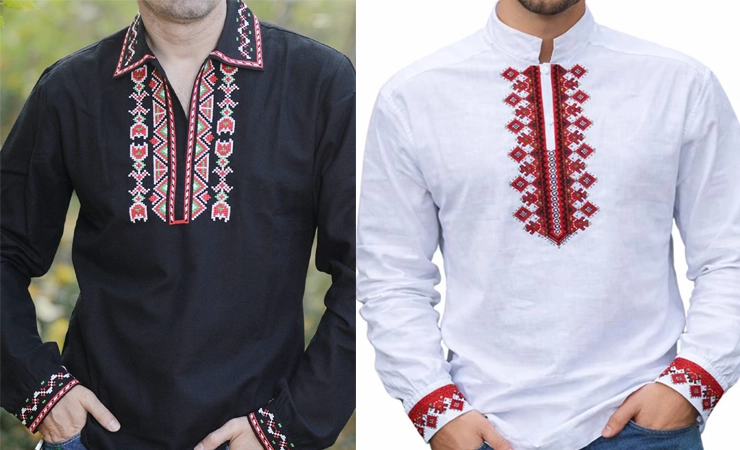
Bulgaria’s traditional clothing is a striking reflection of regional identity, craftsmanship, and centuries-old customs. Rich embroidery, symbolic color palettes, and distinctive silhouettes define garments that were once everyday wear and are now proudly preserved for festivals and cultural events. Each region of the country developed its own variations, shaped by climate, occupation, and historical influences.
Men’s Traditional Clothing in Bulgaria
Riza
The riza is a traditional Bulgarian shirt that forms the foundation of men’s attire. Typically made from linen or cotton, it is designed for comfort and breathability, especially in rural settings. The shirt is often decorated with intricate embroidery along the collar, cuffs, and chest, with patterns that can indicate regional origin or even social status. Its loose fit allows for ease of movement, making it practical for both daily labor and festive occasions.
Poturi
Poturi are traditional men’s trousers, instantly recognizable by their dropped crotch and wide upper section that tapers toward the ankles. Usually made from wool, they provide warmth during colder months while allowing flexibility for physical work. The design reflects Ottoman-era influences, yet evolved into a distinctly Bulgarian form over time. Often dark in color, poturi are paired with belts or sashes that accentuate their unique silhouette.
Elek
The elek is a sleeveless vest worn over the riza, adding both structure and decorative richness to the outfit. Crafted from wool or velvet, it is frequently adorned with embroidery, braiding, and sometimes metal embellishments. This garment highlights the wearer’s craftsmanship and regional identity, as patterns and motifs vary widely. The eleks worn for celebrations are especially elaborate, serving as a visual centerpiece of the ensemble.
Pojas
The pojas is a long, woven sash wrapped around the waist, serving both functional and aesthetic purposes. It helps secure the trousers and provides support to the lower back during physical labor. Traditionally made in bold colors like red, it also adds contrast and vibrancy to the outfit. In some regions, the pojas could also be used to carry small tools or personal items, making it an essential accessory.
Kalpak
The kalpak is a traditional hat made from sheepskin or felt, typically worn during colder seasons. Its cylindrical or slightly tapered shape gives it a distinctive appearance, often associated with masculinity and authority. Beyond its practical function of warmth, the kalpak also serves as a cultural symbol, often worn during national celebrations and folklore performances. Variations in height and form can reflect regional styles and personal preference.
Women’s Traditional Clothing in Bulgaria
Riza
Similar to the men’s version but often more elaborately decorated, the women’s riza is a long shirt or underdress that forms the base of the outfit. It is typically made from fine linen and features detailed embroidery on the sleeves, neckline, and hem. These patterns are highly symbolic, often representing protection, fertility, or prosperity. The riza is both a functional garment and a canvas for artistic expression.
Sukman
The sukman is a sleeveless overdress worn over the riza, usually made from wool in darker tones. It is fitted at the top and flares out toward the bottom, creating a graceful silhouette. The edges and seams are richly decorated with embroidery, lace, or woven trims that vary by region. Sukmans are often worn during festive occasions and are considered one of the most iconic elements of Bulgarian women’s dress.
Saya
The saya is another type of outer garment, typically an open-front robe or coat worn over the riza. Unlike the sukman, it is lighter and often made from cotton or linen, making it suitable for warmer climates. The saya is decorated with embroidery along the front edges and sleeves, showcasing delicate craftsmanship. It offers a layered look while maintaining comfort and elegance.
Prestilka
The prestilka, or apron, is an essential decorative piece worn over the sukman or saya. It is usually brightly colored and richly embroidered, often featuring geometric or floral motifs. In many regions, women wear two aprons—one in the front and one at the back—creating a striking visual effect. Beyond its aesthetic appeal, the prestilka symbolizes femininity and domestic skill.
Zabun
The zabun is a long, sleeveless outer garment, often worn during colder seasons. Made from wool or heavy fabric, it provides warmth while maintaining the layered structure of traditional attire. It is typically decorated with subtle embroidery or trimming along the edges. The zabun adds depth and sophistication to the overall look, completing the ensemble with both practicality and style.
Modern Clothing in Bulgaria
Modern clothing in Bulgaria reflects a blend of European fashion trends and subtle traditional influences. While everyday wear aligns with global styles, elements such as embroidery and folk-inspired patterns occasionally appear in contemporary designs. Bulgarian designers often reinterpret traditional garments, incorporating motifs from pieces like the riza or prestilka into modern silhouettes. This fusion creates a unique fashion identity that honors heritage while embracing innovation. Today, traditional clothing is most commonly seen during cultural festivals, weddings, and national celebrations, where it continues to symbolize pride and cultural continuity.
The post Complete Guide to Bulgarian Clothing appeared first on The Fashiongton Post.