
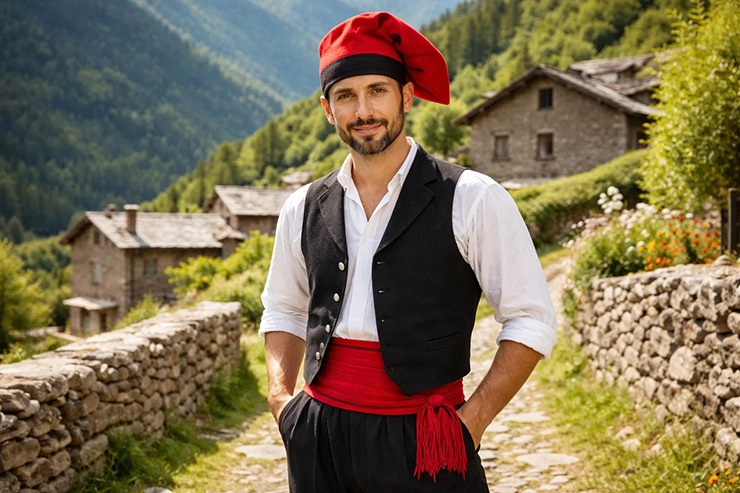
Nestled in the Pyrenees between France and Spain, Andorra’s traditional clothing reflects a unique blend of Catalan heritage, mountain practicality, and European rural elegance. Historically shaped by climate, occupation, and social customs, Andorran attire is both functional and symbolic. Rich fabrics, layered garments, and carefully chosen accessories defined everyday wear as well as festive dress. The Fashiongton Post prepared for you a detailed look at the essential elements of traditional Andorran clothing for both men and women.
Men’s Traditional Clothing in Andorra
Barretina
The barretina is a distinctive red wool cap traditionally worn by men across Catalan regions, including Andorra. It is soft, elongated, and usually droops to one side, giving it a recognizable silhouette. Beyond its practicality in keeping the head warm in mountainous climates, the barretina also held cultural significance as a symbol of regional identity. It was commonly worn during daily work as well as festive occasions, making it a versatile and iconic accessory. Today, it remains a visual shorthand for traditional Catalan-Andorran heritage.
Camisa de Pagès
The camisa de pagès, or peasant shirt, is a loose-fitting white or off-white shirt typically made of linen or cotton. Its breathable fabric made it ideal for labor-intensive work in Andorra’s rugged terrain. The shirt often features simple embroidery or subtle detailing around the collar and cuffs, adding a touch of refinement without compromising practicality. It was designed to be worn under heavier garments, allowing for layering during colder months. This shirt formed the foundational layer of men’s traditional attire.
Faixa
The faixa is a long, wide sash wrapped tightly around the waist, usually in dark colors such as black or deep red. It served both functional and aesthetic purposes, providing back support during physical labor and helping secure other garments in place. The faixa also added structure to the outfit, creating a clean and composed silhouette. In some cases, it was used to carry small tools or personal items. Its presence in traditional dress highlights the blend of utility and style in Andorran clothing.
Calces
Calces are traditional knee-length trousers typically made from wool or heavy cotton. They were tailored to allow ease of movement while offering warmth in Andorra’s alpine climate. Often worn with long socks or stockings, these trousers were practical for both agricultural work and daily activities. Their darker tones helped conceal wear and tear, making them suitable for rugged use. Calces remain an essential component in recreations of traditional male attire.
Espardenyes
Espardenyes are traditional footwear made from natural materials such as canvas and esparto grass. Lightweight and breathable, they were ideal for navigating Andorra’s mountainous landscapes during warmer months. The shoes often feature laces that wrap around the ankle, providing a secure fit. Despite their simplicity, espardenyes are durable and well-suited for both work and casual wear. They continue to be worn today in cultural festivals and traditional events.
Women’s Traditional Clothing in Andorra
Gipó
The gipó is a fitted bodice worn by women, typically made from rich fabrics like velvet or wool. It is tailored to accentuate the waist and is often fastened with buttons or laces. The garment may include decorative elements such as embroidery, lace trims, or metallic accents, reflecting the wearer’s social status or occasion. Worn over a blouse, the gipó adds structure and elegance to the outfit. It plays a central role in defining the silhouette of traditional women’s attire.
Brusa
The brusa is a lightweight blouse worn underneath the gipó, usually made from cotton or linen. It features long sleeves and may include delicate details such as ruffles or lace at the neckline and cuffs. Designed for comfort and breathability, the brusa balances the heavier outer layers. Its light color palette contrasts beautifully with darker garments, enhancing the overall aesthetic. This piece is essential for both daily wear and formal traditional outfits.
Faldilla
The faldilla is a long, full skirt often made from wool or heavy fabric to provide warmth. It typically reaches the ankles and is designed with pleats or gathers to allow freedom of movement. The skirt may feature subtle patterns or stripes, adding visual interest without overwhelming the outfit. It is both practical and elegant, suitable for work as well as celebrations. The faldilla is a cornerstone of traditional women’s dress in Andorra.
Davantal
The davantal, or apron, is worn over the faldilla and serves both protective and decorative purposes. Made from sturdy fabric, it helps shield the skirt from dirt during daily chores. At the same time, it often features embroidery, lace, or ornamental details that enhance the outfit’s appearance. The davantal can vary in style depending on the occasion, from simple everyday versions to more elaborate festive designs. It represents the fusion of functionality and artistry in traditional clothing.
Mantellina
The mantellina is a delicate shawl or veil worn over the shoulders or head. Typically crafted from lace or fine fabric, it adds an element of grace and sophistication to the ensemble. It was often worn during religious events, celebrations, or formal gatherings. The mantellina not only provided modest coverage but also served as a decorative highlight. Its intricate patterns and textures make it one of the most elegant components of women’s traditional attire.
Modern Clothing in Andorra
Modern clothing in Andorra reflects contemporary European fashion trends while maintaining subtle ties to tradition. Due to its status as a shopping destination, the country offers a wide range of international brands and styles, from casual wear to luxury fashion. Practicality remains important, especially given the mountainous climate, so layered outfits, outerwear, and durable footwear are common. Traditional elements occasionally reappear during festivals and cultural events, preserving a connection to heritage. Overall, Andorra’s modern fashion scene is a blend of global influence and local identity, adapting to both lifestyle and environment.
The post Complete Guide to Andorran Clothing appeared first on The Fashiongton Post.