
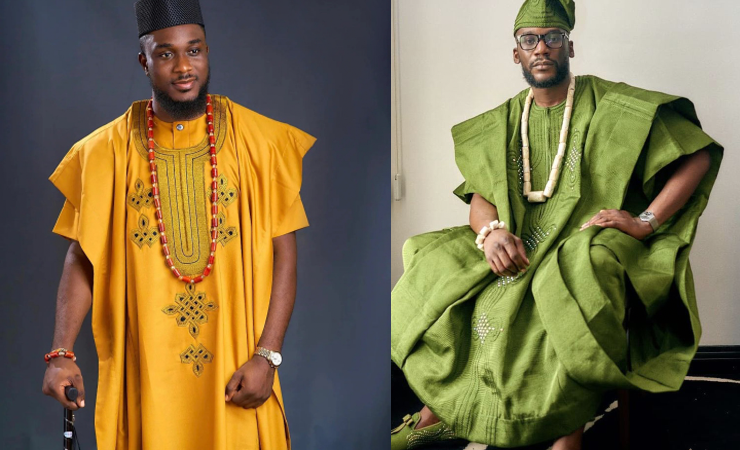
From regal robes to intricately embroidered wrappers, the diversity of traditional Nigerian clothing reflects the country’s cultural pride and social status. Here are some of the most unique Nigerian garments which are more than fashion—they are statements of identity, celebration, and continuity.
Nigerian Men’s Traditional Clothing
Agbada
The Agbada is a flowing, wide-sleeved robe worn by Yoruba men, symbolizing wealth and prestige. Made from cotton or richly embroidered brocade, it typically includes three pieces: an inner shirt, trousers (sokoto), and the outer gown. Agbada is worn during ceremonies such as weddings, religious festivals, and political events. The intricate embroidery on the front is often custom-designed to reflect the wearer’s status or lineage.
Babban Riga
Originating from Northern Nigeria, the Babban Riga is a voluminous robe worn by Hausa and Fulani men. It is usually paired with a long-sleeved kaftan underneath and accessorized with a traditional cap called a hula. The Babban Riga is both a cultural and Islamic garment, commonly seen at Friday prayers and during Eid celebrations. Its flowing silhouette and fabric choices reflect modesty and regional elegance.
Senator Suit
The Senator suit is a modern take on traditional attire, inspired by the simplicity of Igbo male fashion. It comprises a long, tunic-style top with matching trousers, often adorned with embroidery around the neckline or cuffs. This outfit is widely accepted across ethnic lines and is favored for political functions and urban celebrations. Its versatility and dignified appearance have made it a wardrobe staple for contemporary Nigerian men.
Isi Agu
A symbol of Igbo pride, the Isi Agu (meaning “lion’s head”) is a richly patterned velvet shirt adorned with lion motifs. It is traditionally worn by Igbo chiefs and dignitaries, often complemented by a red cap (okpu agu) and walking stick. Isi Agu signifies strength, authority, and respect within the community. Though ceremonial in nature, it remains a powerful emblem of cultural identity.
Danshiki
The Danshiki, a colorful, loose-fitting tunic, is popular across many Nigerian ethnic groups. It’s made from printed or embroidered cotton and usually worn over trousers for both comfort and flair. Initially seen as casual or working attire, it has gained popularity as a fashionable piece for cultural events. The Danshiki’s vibrant colors and patterns reflect Nigeria’s joyful and expressive spirit.
Nigerian Women’s Traditional Clothing
Iro and Buba
The Iro and Buba is a classic Yoruba women’s ensemble consisting of a wrapped skirt (iro) and loose blouse (buba). It is often accompanied by a matching head tie (gele) and shoulder scarf (ipele), forming a complete and elegant look. Made from aso-oke, lace, or Ankara fabrics, the outfit is favored for its grace and adaptability. It is commonly worn during weddings, naming ceremonies, and religious gatherings.
George Wrapper
Popular among the Igbo and Niger Delta women, the George wrapper is an opulent piece made of richly embroidered fabric. Typically worn with a blouse and elaborate headgear, it is associated with royalty and high-status occasions. The George wrapper shines in traditional weddings and formal community events. Its origins trace back to Indian-imported textiles, which were embraced and localized into Nigerian couture.
Ankara Gown
Ankara fabric, known for its bold patterns and colors, is used to create a variety of gown styles for women. These gowns can range from fitted dresses to voluminous ball styles, customized to personal taste. Ankara is worn across Nigeria by women of all backgrounds, showcasing national unity through fashion. It has also gained international recognition as a symbol of African creativity and beauty.
Boubou
The female kaftan, or boubou, is a free-flowing dress that originated in the Muslim-dominated northern regions. It is usually floor-length with wide sleeves and made from lace, silk, or chiffon, often embroidered around the neckline. This garment exudes elegance while maintaining cultural modesty. It is worn during religious holidays, weddings, and special events.
Aso-Oke
Aso-Oke is a handwoven fabric worn by Yoruba women for special ceremonies like weddings and festivals. The attire typically includes a wrapper, blouse, gele (head tie), and ipele (shawl). Aso-Oke comes in various styles like Sanyan, Etu, and Alaari, each representing different occasions and levels of formality. It is a prestigious outfit that celebrates craftsmanship and tradition.
Nigerian Modern Clothing
Contemporary Nigerian fashion blends traditional elements with global trends. Urban men and women frequently mix classic fabrics like Ankara with Western silhouettes, creating unique pieces that reflect both heritage and modernity. Local designers have become influential voices on global runways, promoting Afrocentric aesthetics with international appeal. From tailored suits to streetwear, today’s Nigerian clothing continues to evolve while proudly embracing its cultural roots.
The post Complete Guide to Nigerian Clothing appeared first on The Fashiongton Post.