
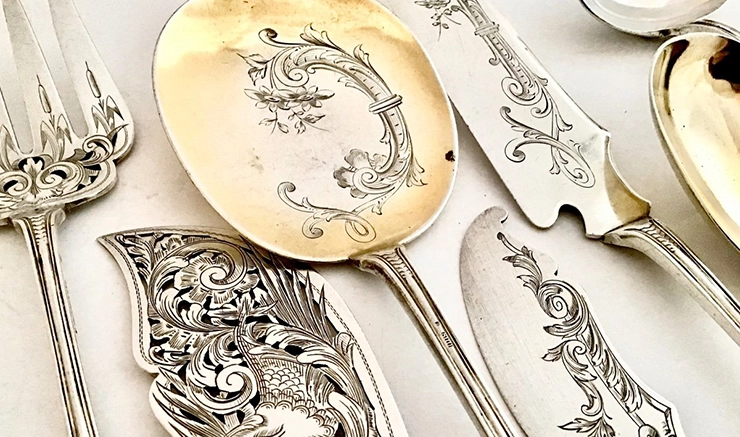
There’s a certain magic in the gleam of vintage French silverware — a timeless elegance that evokes Parisian dining rooms, old-money sophistication, and the storied craftsmanship of France’s finest ateliers. For collectors, interior designers, and lifestyle enthusiasts, French silver is more than just functional; it’s a statement of taste, heritage, and history. But with so many pieces circulating in flea markets, vintage stores, and online auctions, knowing which brands are truly collectible — and how to authenticate them — is essential.
The Top 5 French Brands Collectors Hunt For:
Christofle
Founded in 1830, Christofle is the benchmark for French luxury silver. Renowned for its polished elegance and innovative electroplating techniques, Christofle pieces are highly sought after. Look for the signature bee hallmark and “Christofle” stamp, sometimes accompanied by “Orfèvrerie,” indicating genuine silver plating. Collectors especially prize Art Deco flatware, candelabras, and serving pieces.
Puiforcat
Established in 1820, Puiforcat represents the pinnacle of French silversmithing. Its flatware, tea sets, and serving trays often feature fluid Art Deco and Art Nouveau motifs. Authentic pieces carry the Puiforcat signature and a French eagle hallmark for sterling silver. Limited editions and classic designs from the 19th and early 20th centuries are particularly prized.
Odiot
Dating back to 1690, Odiot is known for ceremonial sets, ornate serving pieces, and tableware commissioned by aristocrats. Pieces often display finely engraved hallmarks, eagle marks for sterling silver, and sometimes commission stamps. Collectors value Odiot for its rarity, elegance, and historical significance.
Le Page
Founded in the 1830s, Le Page is less commonly encountered but highly regarded among connoisseurs for its quality and refinement. Hallmarks typically include the “Le Page” signature and Minerva head, indicating genuine sterling silver. Flatware and tea or coffee sets from this maison are particularly collectible for their classic 19th-century style.
F. D. Guérin
This 19th-century French silversmith is known for understated, elegant designs, especially flatware and serving pieces. Hallmarks include Guérin’s signature and the Minerva head, sometimes with additional decorative symbols. These rare pieces are highly sought after by collectors and often appear at high-end flea markets and auctions.
How to Spot the Real Thing
Hallmarks are the first and most important clue. French silverware is usually stamped with a Minerva head (indicating sterling silver), numeric purity marks like 800, 925, or 950, and the maker’s signature. Be wary of worn, forged, or missing marks — reproductions often mimic them without precision.
Weight and feel are also key. Real silver has a dense, substantial heft and a subtle, warm sheen that distinguishes it from plated or imitation metals. Gently tapping a piece can reveal the tone: genuine silver produces a clear, resonant note rather than a dull clunk.
Provenance adds significant value. Pieces sourced from reputable flea markets, estate sales, or verified auctions are generally safer bets than anonymous online finds. Parisian flea markets, such as Marché aux Puces de Saint-Ouen, often feature seasoned sellers who can verify authenticity.
Styling Tips & Lifestyle Appeal
French silverware elevates modern interiors beyond simple dining. A Puiforcat tea set on a marble countertop, a Christofle candelabra for evening entertaining, or vintage flatware arranged elegantly in a wooden box can transform an everyday table into a refined, sophisticated setting. For fashion-conscious hosts, pairing silverware with linen napkins, hand-blown glassware, and minimalist tableware creates a timeless, effortlessly chic tablescape.
Whether you’re hunting for investment pieces, curating a vintage-inspired home, or simply indulging in a tactile connection to French history, understanding the hallmarks, brands, and subtleties of French silverware ensures you’re not just buying objects — you’re acquiring a piece of heritage. In the world of vintage collectibles, that knowledge is as valuable as the silver itself.
The post French Vintage Silverware 101: The Most Wanted Brands, Hallmarks & How to Spot the Real Thing appeared first on The Fashiongton Post.