
From royal courts to everyday village life, Uganda’s garments are designed not only for beauty but also for symbolism, modesty, and social meaning. Each piece carries history—woven into bark cloth, cotton, or silk—and often signals status, tribe, or occasion. The Fashiongton Post decided to explore today the most iconic traditional garments worn by men and women across Uganda, offering you a unique insight into their structure, significance, and contemporary relevance.
Men’s Traditional Clothing in Uganda
Kanzu
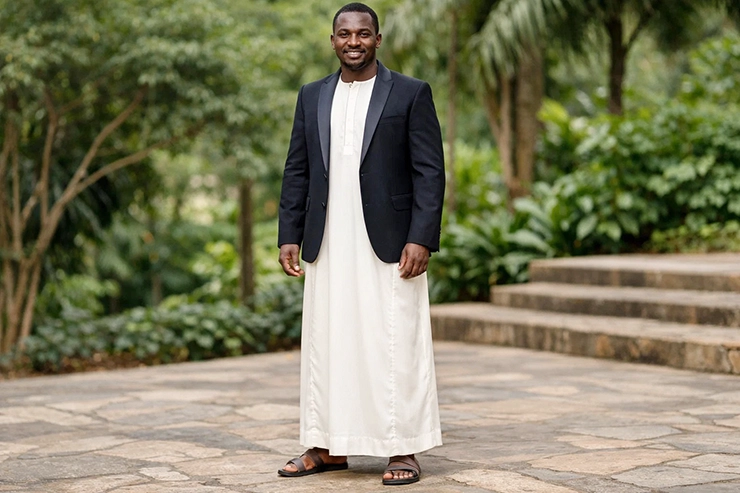
The kanzu is the most widely recognized traditional attire for men in Uganda, particularly among the Baganda people. It is a long, white or cream-colored robe that extends to the ankles and features a structured collar, often stiffened to maintain its elegant shape. Traditionally made from cotton or silk, the kanzu is worn during formal occasions such as weddings, religious ceremonies, and cultural events. It is usually paired with a jacket for added sophistication, especially in urban settings. The simplicity of the kanzu’s design reflects dignity and respect, making it a staple of Ugandan male identity.
Koti
The koti is a tailored jacket worn over the kanzu, adding a layer of refinement and modern influence to traditional dress. Typically dark in color—black, navy, or charcoal—it contrasts sharply with the light tone of the kanzu underneath. The koti is often reserved for formal events, where it enhances the wearer’s appearance with a structured silhouette. It blends traditional and Western tailoring, symbolizing Uganda’s evolving fashion landscape. In many ceremonies, the koti signifies prestige and attention to detail.
Gomesi Busuuti
Though primarily associated with women, a male-adapted version of the gomesi exists in certain ceremonial contexts. This version is simplified and less voluminous, often worn during cultural performances or rituals. It is crafted from similar fabrics but tailored to suit masculine proportions and movement. The garment reflects the adaptability of traditional designs across gender roles in Uganda. Its presence in ceremonies highlights cultural unity and shared heritage.
Bark Cloth Garment
Bark cloth, made from the inner bark of the Mutuba tree, is one of the oldest textiles in Uganda. Men traditionally wore bark cloth garments wrapped around the body, especially in pre-colonial times. The material has a distinctive earthy texture and natural brown tones, symbolizing a deep connection to nature and ancestral traditions. Today, bark cloth is mostly used in cultural ceremonies, funerals, and heritage displays rather than daily wear. Its continued use preserves an important aspect of Uganda’s intangible cultural heritage.
Maasai Shuka
In some regions of Uganda, particularly near the Kenyan border, men wear the shuka—a brightly colored, checkered cloth associated with Maasai culture. It is wrapped around the body or draped over one shoulder, offering both comfort and mobility. The bold patterns and vibrant colors make it visually striking and culturally expressive. While not originally Ugandan, the shuka has been embraced in certain communities due to cross-border cultural exchange. It is often worn during pastoral activities or traditional gatherings.
Women’s Traditional Clothing in Uganda
Gomesi
The gomesi is the most iconic traditional dress for women in Uganda, especially among the Baganda. It is a floor-length gown characterized by wide, square shoulders and a sash tied around the waist to accentuate the figure. The dress is typically made from silk, satin, or cotton and comes in vibrant colors and patterns. It is worn during weddings, cultural ceremonies, and formal gatherings, symbolizing grace and femininity. The gomesi is not only a garment but a cultural emblem of pride and identity.
Mushanana
The mushanana is a traditional outfit worn primarily in western Uganda, particularly by the Banyankole and Bakiga women. It consists of a long skirt and a matching shawl draped elegantly over one shoulder. Made from lightweight fabrics, the mushanana allows for fluid movement and comfort in warm climates. The way the shawl is styled can vary, reflecting personal taste and occasion. It is often worn during traditional ceremonies, showcasing both modesty and sophistication.
Suuka
The suuka is a versatile wrap garment worn by women across various Ugandan communities. It is a rectangular piece of fabric wrapped around the body, sometimes paired with a blouse or worn alone depending on the setting. The suuka is practical for daily wear due to its simplicity and ease of movement. It is also used during labor-intensive activities, making it both functional and culturally relevant. Its adaptability has ensured its continued use in both rural and urban areas.
Busuuti
The busuuti is another name often used interchangeably with the gomesi, though it can refer to slightly different regional variations. It maintains the same structured shoulders and flowing silhouette but may differ in fabric choice or decorative elements. The busuuti is deeply embedded in Buganda culture and is often passed down through generations. It is worn with pride during significant life events, symbolizing continuity and tradition. The garment’s enduring popularity highlights its cultural importance.
Kitengi Dress
Kitengi dresses are made from brightly patterned African wax print fabric and are widely worn by Ugandan women. Unlike more formal traditional garments, kitengi dresses come in various modern styles, including fitted, flared, or layered designs. They are suitable for both casual and semi-formal occasions, bridging the gap between tradition and contemporary fashion. The bold prints often carry symbolic meanings or reflect current trends. Kitengi remains a favorite for its versatility and vibrant aesthetic.
Modern Clothing in Uganda
Modern clothing in Uganda reflects a dynamic fusion of traditional elements and global fashion influences. Urban populations often wear Western-style clothing such as jeans, dresses, and suits, while still incorporating traditional fabrics like kitengi into their wardrobes. Designers in Uganda are increasingly blending heritage silhouettes with contemporary cuts, creating unique fashion statements that appeal to younger generations. Cultural pride remains strong, and traditional garments are still prominently worn during ceremonies and national events. This coexistence of old and new defines Uganda’s evolving fashion identity, making it both rooted and forward-looking.
The post Complete Guide to Uganda’s Clothing appeared first on The Fashiongton Post.