
Uzbekistan, a country at the crossroads of Central Asia, boasts a rich cultural heritage reflected vividly in its traditional clothing. Rooted in centuries of history, the attire here is a vibrant expression of identity, climate, and craftsmanship. Each piece tells a story of tribal origins, local materials, and artisanal techniques, making Uzbek clothing both functional and artistic. This guide explores the most iconic men’s and women’s traditional garments, offering a detailed insight into Uzbekistan’s sartorial legacy.
Men’s Traditional Clothing in Uzbekistan
Chapan
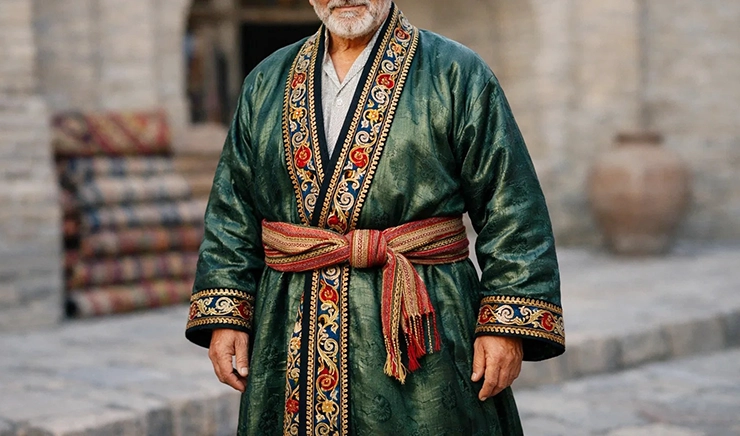
The Chapan is a traditional long coat worn by Uzbek men, often crafted from heavy silk or cotton fabrics and richly embroidered along the edges. Its loose-fitting design allows ease of movement, making it practical for both daily wear and ceremonial occasions. Typically adorned with intricate patterns, the Chapan reflects regional craftsmanship and often symbolizes status or age within the community. The coat is usually tied at the waist with a sash or belt, enhancing its structured yet relaxed silhouette.
Tubeteika
The Tubeteika, a small embroidered cap, is an essential accessory in Uzbek men’s attire. Worn daily or during special ceremonies, it comes in various colors and designs, each representing different regions or social affiliations. Skilled artisans often handcraft the Tubeteika with geometric or floral motifs, making each piece unique. It not only protects the head but also serves as a cultural emblem, highlighting Uzbekistan’s rich embroidery traditions.
Koylek
The Koylek is a long tunic or shirt that serves as the foundation of traditional male attire in Uzbekistan. Made from cotton or silk, it can be worn plain for daily use or decorated with embroidery for formal events. Its loose-fitting style ensures comfort in Uzbekistan’s varying climate, from hot summers to chilly winters. Paired with trousers, the Koylek provides a layered and versatile look that has remained popular for generations.
Shalvar
Shalvar are wide-legged trousers that are a staple of Uzbek men’s clothing. Known for their comfort and practicality, they allow freedom of movement and are suitable for daily labor, horseback riding, or ceremonial dancing. Often made of cotton or linen, Shalvar can be plain or decorated with modest embroidery along the seams. The trousers are paired with a Koylek or Chapan, completing the traditional male ensemble with elegance and ease.
Belbog
The Belbog is a wide decorative belt or sash, typically worn over the Chapan or Koylek. It is not only functional, helping secure garments, but also serves as a statement piece, often richly adorned with embroidery or metallic threads. Different regions in Uzbekistan feature distinctive styles and patterns, making the Belbog a recognizable marker of cultural identity. Beyond its visual appeal, it signifies the wearer’s maturity, social status, or participation in special occasions.
Women’s Traditional Clothing in Uzbekistan
Suzani Tunic
The Suzani Tunic is a traditional garment distinguished by its vibrant hand-embroidered patterns, often depicting flowers, vines, and geometric shapes. Made from cotton or silk, the tunic is lightweight and comfortable, suitable for Uzbekistan’s hot climate. Historically, Suzani embroidery served as a form of storytelling, with motifs representing family heritage and regional identity. Worn for daily life or special occasions, the tunic combines practical wearability with artistic expression.
Chakmon
The Chakmon is a long, decorative female robe often worn over other garments during festivals or ceremonies. Made from silk or cotton and richly embroidered along the edges, it showcases elaborate craftsmanship with floral and symbolic patterns. Its flowing design provides both elegance and modesty, while its detailed ornamentation signifies status and cultural heritage. Traditionally, the Chakmon was also a gift during weddings or special celebrations, making it a highly valued garment.
Paranja
The Paranja is a traditional female overgarment designed for modesty and protection from the sun. Typically crafted from lightweight fabrics, it covers the body completely while allowing air circulation to remain comfortable in hot climates. Historically, it was an essential item in public settings, reflecting social norms and local customs. Modern adaptations of the Paranja have retained its cultural significance while incorporating more decorative elements for special occasions.
Doppa
The Doppa is an embroidered square or round cap worn by women, similar in cultural significance to the men’s Tubeteika. Each Doppa features detailed patterns, often floral or geometric, representing regional identity and family heritage. Women wear it during daily life, festivals, or as part of ceremonial attire, complementing the Suzani Tunic or Chakmon. The cap is both a fashion statement and a symbol of craftsmanship, showcasing the skills of local artisans.
Shyrdak Skirt
The Shyrdak Skirt is a traditional quilted skirt, often made from colorful, layered fabrics and decorated with patchwork or embroidery. It provides warmth and comfort, particularly in colder regions of Uzbekistan. Worn with blouses, Chakmons, or Suzani Tunics, the Shyrdak Skirt adds texture and visual interest to women’s ensembles. Its distinctive patterns and craftsmanship make it a celebrated example of Uzbek textile art, combining function with aesthetic beauty.
Modern Clothing in Uzbekistan
Today, modern clothing in Uzbekistan reflects a blend of traditional and global fashion influences. Urban populations in cities like Tashkent often wear Western-style outfits for daily life while incorporating traditional elements, such as Tubeteikas, Suzani embroidery, or decorative belts, for cultural events. Designers increasingly reinterpret classic garments like the Chakmon or Suzani Tunic, combining historical patterns with contemporary cuts. Despite these modernizations, traditional clothing continues to play a vital role in ceremonies, weddings, and festivals, preserving Uzbekistan’s rich sartorial heritage for future generations.
The post Complete Guide to Uzbekistan Clothing appeared first on The Fashiongton Post.