
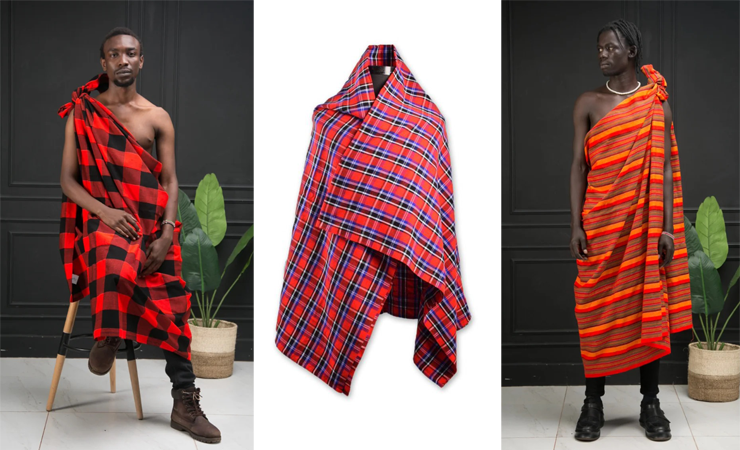
Each ethnic group in Kenya has crafted unique garments that serve both aesthetic and practical purposes, often woven with deep symbolic meaning. From the bold reds of the Maasai Shuka to the intricate beadwork worn by many communities, traditional attire tells a story of heritage, status, and belonging. Today, while these garments remain integral to ceremonies and daily life, modern Kenyan fashion continues to evolve, blending indigenous influences with global trends.
Kenya’s Traditional Men’s Clothing
Shuka
Worn by the Maasai, the Shuka is a rectangular, thick cotton or wool fabric, often in red and checkered patterns, wrapped around the body. It serves as protection from the harsh climate, shielding wearers from the cold at night and the sun during the day. The red color symbolizes strength, bravery, and the warrior spirit of the Maasai people. Over time, the Shuka has also become a cultural icon, widely recognized as a symbol of Kenyan heritage.
Kanzu
Kanzu is a long, white or cream-colored robe worn by Swahili men, especially in the coastal regions. Traditionally made from soft cotton, it is designed to keep the wearer cool in the humid coastal climate. The Kanzu is commonly worn for religious ceremonies, weddings, and formal gatherings, often paired with a decorative overcoat known as a Bisht. The accompanying Kofia, a round, embroidered cap, completes the outfit and adds a touch of elegance.
Kitenge Shirt
Made from colorful African wax fabric, Kitenge shirts are tailored for both casual and formal wear. The bold patterns and bright colors reflect Kenyan artistic expression and identity, with different designs sometimes symbolizing specific messages or cultural values. Kitenge fabric is highly versatile and is often used to make matching outfits for families during special occasions. These shirts are popular in both rural and urban areas, highlighting the fusion of tradition and modern fashion.
Leso Wrap
While primarily associated with women, men sometimes wear Leso as a wraparound garment during traditional ceremonies or casual home settings. The Leso is a thin cotton fabric, often featuring intricate designs and Swahili sayings printed along the edges. It is a practical garment, worn as a sarong or draped over the shoulders, offering comfort in warm weather. Among coastal communities, the Leso is widely used as everyday attire due to its lightweight nature.
Maasai Beads
Maasai men adorn themselves with beaded necklaces, wristbands, and headpieces that carry cultural significance and denote status, age, and achievements. The bead colors hold specific meanings: red symbolizes bravery, blue represents energy, and white signifies purity. Warriors and elders wear elaborate beaded ornaments to showcase their accomplishments and social standing. These accessories are handcrafted with great precision, often passed down through generations as treasured heirlooms.
Kenya’s Traditional Women’s Clothing
Kanga
Kanga is a lightweight rectangular fabric printed with colorful patterns and Swahili proverbs. Women wrap it around the waist, over the shoulders, or use it as a headscarf, often wearing it for daily activities and celebrations. The printed sayings on the Kanga often carry messages of wisdom, love, or social commentary. Kangas are given as gifts during important life events such as weddings and childbirth, signifying goodwill and community ties.
Gomesi
Worn by the Kikuyu and some other communities, the Gomesi is a long, elegant dress with puffed sleeves and a sash tied at the waist. It is reserved for special occasions like weddings and ceremonies, where it symbolizes dignity and status. The dress is made from high-quality silk, satin, or cotton fabric, often decorated with elaborate embroidery. Traditionally, married women wear the Gomesi as a mark of respect and maturity within the community.
Dirac
Dirac is a flowing, lightweight dress worn by Kenyan women, often made from chiffon and paired with an underdress. The Dirac is favored for its airy, loose fit, providing comfort in hot weather. It is worn during festive occasions, particularly weddings and religious gatherings, and is accessorized with a matching headscarf and jewelry. The Dirac is often custom-made, with intricate patterns and shimmering fabrics adding to its elegance.
Maasai Beaded Jewelry
Women wear intricately beaded necklaces, earrings, and headbands, often indicating marital status, social rank, or age group. Each piece is handcrafted using a combination of vibrant beads arranged in symbolic patterns. The beaded collars worn by Maasai women can be massive, covering much of the chest, and are designed to move rhythmically during traditional dances. These accessories are deeply embedded in cultural identity and serve as a form of non-verbal communication within the community.
Modern Kenyan Clothing
Modern Kenyan fashion is a fusion of traditional elements and global styles, creating a unique and contemporary aesthetic. Designers incorporate Kitenge, Kanga, and Shuka fabrics into stylish dresses, suits, and casual wear, making them fashionable yet deeply rooted in Kenyan heritage. Many young professionals opt for a mix of Western fashion with African-inspired prints, while cultural pride is reflected in the continued use of beaded accessories and handcrafted leather sandals. With a growing local fashion industry, Kenyan designers are gaining international recognition for their innovative take on blending heritage with modern trends.