
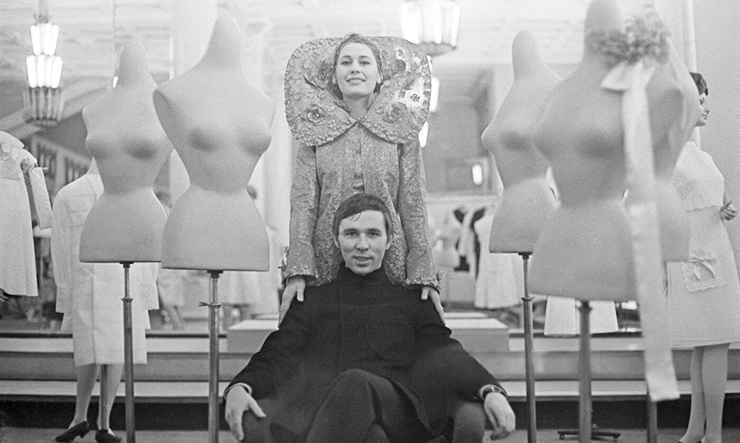
Vyacheslav Zaitsev (02 March 1938 – 30 April 2023) was one of the most iconic and influential Russian fashion designers, often referred to as the “Red Dior” for his ability to bring elegance, artistry, and innovation to Soviet and post-Soviet fashion. His career spanned decades, making him a central figure in shaping the identity of Russian couture and elevating it to global recognition. Born in Ivanovo, a city traditionally known for its textile industry, Zaitsev’s early exposure to fabrics and patterns played a crucial role in forming his lifelong passion for clothing design. Despite the hardships of his youth and the limitations of growing up in a modest working-class family, he showed an early creative spark that would eventually lead him to redefine fashion in Russia.
Zaitsev studied at the Moscow Textile Institute, where he specialized in applied arts. His graduation project, which focused on workwear for women, already revealed his unique style, combining practicality with bright, folkloric elements. Although Soviet officials at first considered his designs “too extravagant” and not aligned with socialist realism, his daring vision stood out and marked him as an innovator. In the early 1960s, Zaitsev began working at the All-Union House of Fashion in Moscow, where his designs started gaining attention. Unlike many of his contemporaries, he boldly incorporated Russian folk motifs, vibrant colors, and intricate ornamentation into his clothing, transforming traditional cultural codes into modern fashion statements.
By the late 1960s and early 1970s, Zaitsev was already attracting international recognition. Western journalists dubbed him the “Red Dior,” not only because of the luxurious character of his collections but also because he managed to thrive creatively within the rigid Soviet system. This label was both a compliment and a political statement, as his work proved that high fashion could exist even behind the Iron Curtain. His collections combined theatricality with wearability, and his designs were admired for their rich textures, elegant silhouettes, and attention to detail. Zaitsev also demonstrated a mastery of staging and presentation, making his runway shows cultural events that drew wide attention.
Throughout the 1980s, he became a symbol of Soviet luxury, designing outfits for celebrities, artists, and political figures. One of his most famous collaborations was creating wardrobes for Russian pop stars such as Alla Pugacheva, who became closely associated with his dramatic and glamorous costumes. His influence extended beyond clothing, as he was also active in developing perfumes, accessories, and even engaging in painting and theatrical costume design. Zaitsev’s ability to merge fashion with other forms of art positioned him as a multidimensional cultural figure.
After the dissolution of the Soviet Union, he successfully transitioned into the new era of Russian fashion. In 1982, he opened his own Fashion House in Moscow, which became a landmark of Russian style. This institution not only showcased his work but also served as a training ground for younger designers, many of whom went on to develop successful careers of their own. His brand maintained a reputation for exclusivity, sophistication, and a deep connection to Russian identity. Zaitsev’s aesthetic remained rooted in a combination of folk traditions and contemporary elegance, reflecting both nostalgia and modernity.
Zaitsev was also deeply invested in making Russian fashion known internationally. His shows were held in Paris, New York, and Tokyo, where he consistently received acclaim for his bold and artistic vision. He believed that fashion was not merely about clothing but also about expressing cultural heritage and national identity. Through his work, he presented Russia not only as a consumer of Western trends but as a contributor to global fashion culture.
In addition to his professional achievements, Zaitsev became a beloved public figure. His flamboyant personal style, often characterized by brightly colored suits, hats, and scarves, reflected his artistic spirit. He was also known for his warmth, charisma, and mentorship, always encouraging younger generations of designers to find their voice. His contribution to Russian fashion earned him numerous awards, honors, and the admiration of both the public and the artistic community.
In the later years of his life, Zaitsev continued to work despite health challenges, remaining a symbol of resilience and dedication to art. His passing in April 2023 marked the end of an era, but his legacy continues to influence fashion in Russia and beyond. Vyacheslav Zaitsev Fashion House remains active, preserving his creative vision and serving as a testament to his lasting impact.
The post Vyacheslav Zaitsev appeared first on The Fashiongton Post.