
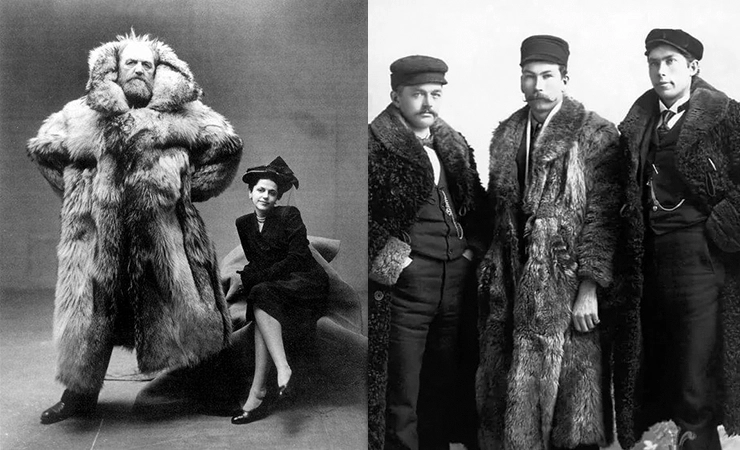
Men’s fur coats in the USSR were much more than just a practical garment to protect against harsh winters. They symbolized power, status, and identity during a complex era marked by political tension, social stratification, and cultural shifts. This phenomenon reflected a unique intersection of fashion, ideology, and economics that still fascinates historians and fashion enthusiasts today.
The Practical Necessity of Fur in Soviet Winters
Soviet winters were notoriously brutal, with temperatures plunging far below freezing for extended periods. For men living in cities like Moscow, Leningrad, or Siberian regions, a durable and warm coat was essential. Fur naturally became the material of choice because of its excellent insulation properties. Unlike synthetic fabrics, which were limited and less advanced during much of the Soviet era, real fur provided unmatched warmth and protection from the cold. But the importance of men’s fur coats in the USSR went far beyond practical concerns. Their symbolic meaning was deeply embedded in Soviet culture and social structure.
Fur Coats as Status Symbols in the USSR
In a society where consumer goods were often scarce and tightly controlled by the state, owning a fur coat was a clear marker of privilege and status. It was a luxury item that few could easily obtain. Men who wore fur coats were often perceived as influential figures — whether party officials, businessmen, or members of the intelligentsia.
The quality, type, and style of a fur coat could indicate a man’s social standing. Expensive furs like sable, mink, or silver fox were highly coveted, while cheaper varieties still signaled a degree of affluence. In many ways, the fur coat served as a quiet yet powerful form of social currency, allowing men to project authority and sophistication.
The Production and Design of Soviet Men’s Fur Coats
Unlike the fast fashion industry today, Soviet fur coats were typically crafted with great care and traditional techniques. The state-run fur factories in cities such as Moscow and St. Petersburg produced coats with durability and style in mind, often blending classic cuts with subtle design details.
Designs tended to be conservative but elegant, balancing functionality with a refined aesthetic. Soviet designers paid attention to details such as collar shapes, fur trimming, and linings to ensure the coat was both practical and visually impressive. Because of limited material availability, coats were sometimes repurposed or tailored from older furs, making each piece unique in its own way.
The Fur Coat in Soviet Popular Culture and Propaganda
The Soviet government used imagery of fur coats strategically in propaganda and media. Men in fur coats often appeared in official portraits, films, and magazines, symbolizing strength, prosperity, and the “new Soviet man.” This was a way to convey success under socialism and promote a positive image of Soviet life.
However, fur coats also carried contradictions. While they signaled wealth, they were also reminders of inequality and the black market. Fur was often smuggled or sold illegally, as demand outpaced official supply. This underground economy became a subculture in itself, influencing fashion trends and consumer behavior in subtle but meaningful ways.
Post-Soviet Legacy and Modern Resurgence
After the USSR collapsed, men’s fur coats retained their symbolic power but also faced new challenges. The fur industry encountered criticism over ethical concerns and changing tastes. Yet, in Russia and other post-Soviet states, fur coats continue to be worn as status symbols, especially during cold seasons.
Modern Russian designers sometimes incorporate traditional fur craftsmanship with contemporary fashion, bridging the gap between Soviet heritage and global luxury trends. This ongoing dialogue keeps the phenomenon of Soviet men’s fur coats relevant and influential in today’s style conversations.
Why is This Soviet Fashion Phenomenon Still Popular Today?
For fashion historians, these coats offer insight into Soviet material culture and design aesthetics. For fashion lovers, they represent a blend of rugged practicality and luxurious craftsmanship that few modern garments can match. And for those interested in cultural studies, men’s fur coats reveal the complexities of Soviet life beyond stereotypes and clichés. The phenomenon of men’s fur coats in the USSR remains a compelling chapter in fashion history. It tells a story of warmth and style forged in a challenging environment—one that continues to inspire fascination from Moscow to Manhattan and beyond.
The post From Pravda to Prada: The Phenomenon of Men’s Fur Coats in the USSR appeared first on The Fashiongton Post.